
Forced & Induced Draft Fan Bearings: Wholesale Supplier
Bearing failure in draft fans is rarely a quality defect; it is almost always a clearance mismatch.
Selecting the correct internal clearance, specifically C3 or C4 for induced draft applications, and ensuring these specifications are explicitly documented in procurement and customs filings are the primary factors in preventing unplanned downtime. Standard clearance bearings will fail rapidly under thermal expansion conditions typical of high-temperature fan operations.
I still remember the silence on the other end of the phone line from Jakarta. It was not the good kind of silence. A major power plant had shut down an entire generation line because a shipment of spherical roller bearings for their induced draft fans was stuck at the port. The issue was not the steel quality or the manufacturing precision. The problem was a single missing suffix on the commercial invoice and the HS code declaration. The bearings specified were standard clearance, but the engineering drawings required C4 clearance to handle the extreme thermal expansion inside the fan housing. Without that specific alphanumeric code visible on the paperwork, customs detained the cargo for verification. The plant sat idle, burning through budget while waiting for a piece of paper to match the metal. That incident shifted my focus entirely. In the world of heavy industry, especially when sourcing Forced & Induced Draft Fan Bearings: Wholesale Supplier solutions, the technical specification is only half the battle. The documentation must mirror the engineering reality with absolute fidelity.
This experience underscores a critical truth for MRO operators and industrial distributors: the supply chain for harsh-environment components is fragile. It breaks not just at the point of manufacture, but at the point of data entry. When you are dealing with high-temperature, high-dust environments, the margin for error in both mechanical selection and administrative accuracy is zero.
What Makes ID/FD Fan Bearings Unique?
Extreme heat and abrasive dust create a hostile environment that standard industrial bearings cannot survive.
Induced draft (ID) and forced draft (FD) fans operate under conditions that are fundamentally different from general machinery. ID fans, located after the boiler and air preheater, handle flue gas that can reach significant temperatures. This heat transfers directly to the bearing housings. Meanwhile, FD fans push ambient air into the boiler, often dealing with high volumes and potential particulate contamination. The combination of thermal stress and potential ingress of fine ash or dust demands specific design features in Forced & Induced Draft Fan Bearings: Wholesale Supplier inventories.
The primary challenge is thermal expansion. As the fan shaft and housing heat up, they expand. If the bearing internal clearance is too tight, this expansion eliminates the running clearance, leading to preload. Preload generates excessive heat, which causes further expansion, creating a thermal runaway effect that destroys the bearing in hours. [NEED_CITE: thermal expansion effects on bearing preload in high-temperature applications]
Furthermore, the sealing solution must be robust. Standard rubber seals may harden and crack under sustained high temperatures, allowing dust to enter the raceway. Once abrasive particles enter, they act like grinding paste, accelerating wear on the rollers and raceways. Therefore, bearings for these applications often require specialized high-temperature stable cages and enhanced sealing arrangements, such as labyrinth seals or non-contacting designs, depending on the specific fan configuration.
Understanding these environmental pressures is the first step in selecting the right component. It is not enough to simply match the bore diameter and outer diameter. The operational context dictates the internal architecture of the bearing.
How to Select the Right Clearance for High Temperatures?
Standard clearance is insufficient for induced draft fans; C3 or C4 clearance is mandatory to accommodate thermal expansion.
The most common mistake in procuring Forced & Induced Draft Fan Bearings: Wholesale Supplier stock is assuming that "standard" clearance is adequate for all applications. In reality, standard clearance (CN) is designed for normal operating temperatures where thermal expansion is minimal. For ID fans, where operating temperatures can cause significant shaft and housing growth, this assumption leads to premature failure.
Internal clearance refers to the amount of space between the rolling elements and the raceways when the bearing is not mounted. As temperature rises, the inner ring expands more than the outer ring in many mounting configurations, reducing this internal clearance. If the initial clearance is not large enough to compensate for this loss, the bearing becomes effectively preloaded.
| Clearance Class | Typical Application | Thermal Compensation Capability | Suitability for ID Fans |
|---|---|---|---|
| CN (Standard) | General motors, pumps | Low | Unsuitable |
| C3 | Moderate temperature variations | Medium | Conditional (Lower temp FD fans) |
| C4 | High temperature, significant expansion | High | Recommended for ID Fans |
| C5 | Extreme thermal gradients | Very High | Specialized Applications |
[NEED_CITE: ISO bearing clearance classes and thermal application guidelines]
Selecting C4 clearance allows the bearing to maintain optimal running clearance even when the shaft has expanded due to heat. This prevents the destructive cycle of thermal runaway. However, specifying C4 is not just a technical decision; it is a procurement imperative. The suffix must be clearly stated in the purchase order, the manufacturer’s certificate, and the shipping documents.
In my early days handling documentation, I saw a batch of bearings rejected by a quality control team because the physical parts were C4, but the accompanying test report listed them as CN. The discrepancy, though minor in terms of physical function, triggered a full audit delay. Consistency across all touchpoints is essential. When sourcing from a Forced & Induced Draft Fan Bearings: Wholesale Supplier, ensure that the technical datasheets explicitly confirm the clearance class matches the operational requirements of your fan system.
Why Do Procurement and Customs Documents Cause Delays?
Missing suffixes in HS codes or invoices lead to port detentions and costly line stoppages.
The technical correctness of a bearing is irrelevant if it cannot clear customs. This is a lesson learned through painful delays. In international trade, especially for specialized industrial components, the Harmonized System (HS) code and the commercial description must align perfectly with the physical goods.
For Forced & Induced Draft Fan Bearings: Wholesale Supplier transactions, the devil is in the details. A spherical roller bearing with C4 clearance is technically a different product variant than one with standard clearance. If the invoice describes "Spherical Roller Bearing" without specifying the C4 suffix, but the physical packaging and part number include it, customs officials may flag the shipment for inspection. They need to verify that the declared goods match the imported items. This verification process can take days or weeks.
I recall a scenario involving a shipment to a cement plant in Southeast Asia. The buyer had ordered emergency spares for a critical fan. The supplier shipped the correct C4 bearings, but the commercial invoice omitted the clearance suffix to save space. At the port, the discrepancy between the part number on the box (which included C4) and the invoice (which did not) raised a red flag. The cargo was held for technical verification. The plant manager was furious, not because the bearings were wrong, but because the paperwork failed to reflect the reality of the product.
To avoid this, every document in the chain must be synchronized. The purchase order, the proforma invoice, the commercial invoice, the packing list, and the certificate of origin must all consistently display the full part number, including any suffixes indicating clearance, lubrication, or cage type. [NEED_CITE: customs documentation requirements for specialized mechanical components]
When working with a Forced & Induced Draft Fan Bearings: Wholesale Supplier, insist on rigorous document verification before shipment. A simple check of the suffixes against the purchase order can prevent weeks of downtime.
How to Optimize Sourcing for Emergency MRO?
Mixed-brand consolidation ensures rapid availability without compromising traceability.
In emergency maintenance situations, waiting for a single brand to restock a specific item is not an option. Unplanned downtime costs far more than the price difference between premium and domestic brands. This is where strategic sourcing comes into play.
Many facilities operate with a mix of equipment from different OEMs, each specifying different bearing brands. Maintaining separate inventory streams for each brand is inefficient and costly. A more effective approach is to consolidate sourcing through a supplier who can provide genuine products from multiple manufacturers, such as SKF, FAG, NSK, and reliable domestic lines like ZWZ or HRB.
This mixed-brand strategy offers several advantages. First, it increases the probability of finding immediate stock. If one brand is backordered, another equivalent model from a different manufacturer may be available. Second, it simplifies logistics. Instead of managing multiple shipments from different vendors, a facility can receive a consolidated container or parcel containing all necessary spares.
However, this approach requires strict quality control. The supplier must guarantee the authenticity of each brand. Counterfeit bearings are a significant risk in the global market, especially for popular brands. [NEED_CITE: risks of counterfeit bearings in industrial supply chains] Traceability documentation, such as original manufacturer certificates and batch numbers, is non-negotiable.
I have seen facilities reduce their emergency response time significantly by partnering with a Forced & Induced Draft Fan Bearings: Wholesale Supplier who maintains a broad, multi-brand spot inventory. Instead of waiting six weeks for a specific imported brand, they could source a technically equivalent, genuine alternative from a different manufacturer within days. The key is trust in the supplier’s ability to verify authenticity and provide accurate technical cross-references.
By leveraging a diverse supply base, MRO teams can ensure that critical spares are always within reach, minimizing the impact of unexpected failures.
Conclusion
Precision in specification and documentation is as critical as the bearing steel itself.
Success in maintaining forced and induced draft fans relies on understanding the unique thermal and environmental challenges they face. Selecting the correct internal clearance, such as C4 for high-temperature applications, prevents thermal failure. Equally important is ensuring that these specifications are accurately reflected in all procurement and customs documents to avoid logistical delays. By adopting a flexible, multi-brand sourcing strategy with a trusted partner, facilities can enhance their resilience against unplanned downtime. The right Forced & Induced Draft Fan Bearings: Wholesale Supplier provides not just components, but the technical and administrative reliability needed to keep critical infrastructure running.
SKF bearings mentioned here
These are the SKF bearing types covered in this article. Open a product to check its designation, category and details before you add it to your list.
 Angular Contact Bearing Double Row Angular Contact Ball Bearing 3302A Tn9/C3 Nylon Cage for Pump & Fan View product 02
 Spherical Roller Bearing Spherical Roller Bearing 22211E 25mm Width for Automotive Pumps and Fans with Factory Warranty View product 03
 Angular Contact Bearing Double Row Angular Contact Ball Bearing 3303 A Tn9/C3 Steel Cage for Pump & Fan Equipment View product 04
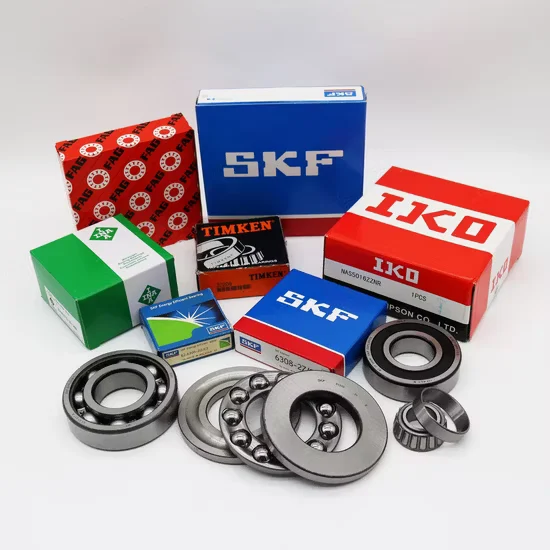 Deep Groove Ball Bearings Genuine FAG 30206 30208 30210 Tapered Roller Bearing Wholesale Supplier View product
Related applications
The equipment and duties this article applies to. Each one links to the SKF bearing types used there.
Quote every model in this article, line by line
Send the SKF models from this article together with your internal stock codes. Each bearing, housing and accessory is quoted on its own line, with its own quantity and specification, and nothing is substituted without your approval.
- Models plus internal codes
- Quantities per line
- Housings and accessories
