



Description
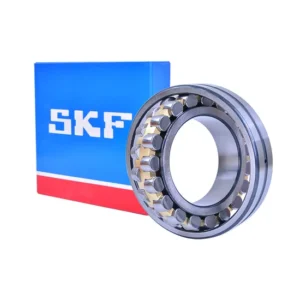
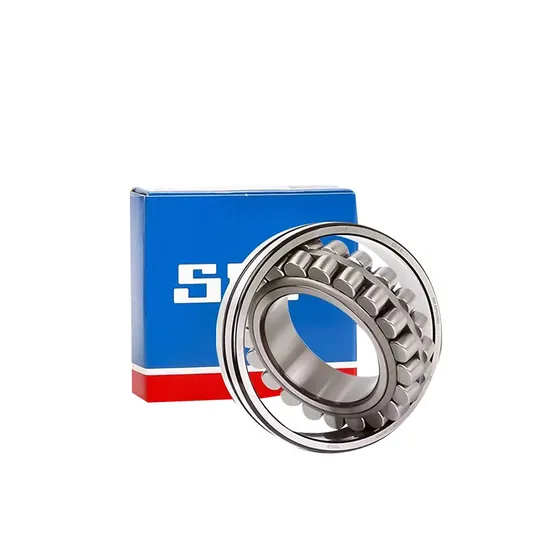
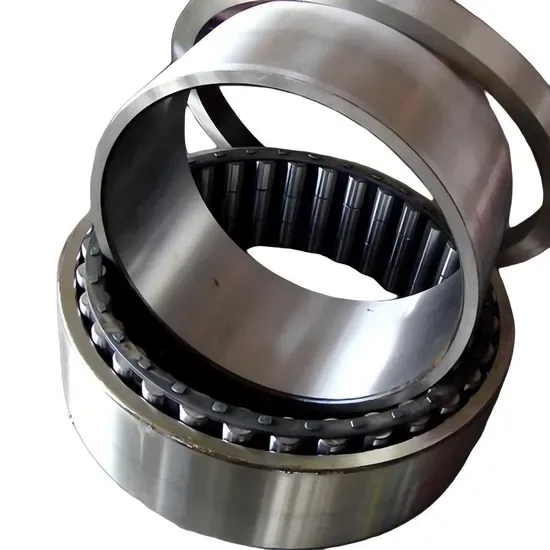
Batch-Traceable Supply — Every 22214SWREAg2E4 spherical roller bearing for continuous caster we ship is backed by authorized distributor documentation and verifiable origin records.
Technical Specifications
| Parameter | Value |
|---|---|
| Designation | generic 22214SWREAg2E4 |
| Bearing Type | Spherical Roller Bearing |
| Bore Diameter (d) | 70 mm |
| Outside Diameter (D) | 125 mm |
| Width (B) | 31 mm |
| Material | Bearing Steel |
| Seal or Shield Type | Sealed Type |
Note: The suffix segments SWR, EA, and g2E4 are unverified and require manufacturer catalog confirmation before final specification lock-in.
Application Suitability
| Industry | Typical Applications |
|---|---|
| Steel and Metallurgy | Continuous caster segment rolls, run-out table guide rollers |
| Mining and Crushing | Vibrating screen eccentric shafts, primary crusher main shafts |
| Industrial Machinery | Heavy-duty conveyor drive pulleys, bucket elevator head shafts |
What Happens When a Sealed Spherical Roller Bearing Meets Caster Scale and Coolant
Sealed designs prevent scale and coolant intrusion where open bearings fail within weeks.
On continuous caster lines, open spherical roller bearings face relentless contamination from casting scale, spray coolant, and grease washout. When an unverified middleman substitutes a standard open bearing where a sealed unit was specified, the ingress of abrasive particles accelerates raceway wear and triggers premature cage failure. The resulting unplanned downtime on a caster segment typically costs far more than the bearing itself. [NEED_CITE: typical downtime cost of continuous caster segment failure] Sourcing the correct 22214SWREAg2E4 spherical roller bearing for continuous caster through authorized channels ensures the seal specification matches the original equipment design, avoiding the field failures that mis-specified replacements cause.
Matching the 22214SWREAg2E4 to Continuous Caster Demands
The 22214SWREAg2E4 spherical roller bearing for continuous caster is positioned for environments where contamination and lubricant loss are the dominant failure modes. Its sealed configuration retains factory-charged lubricant and blocks scale particles from reaching the roller-raceway interface, extending service intervals on caster segment rolls. We cross-check every suffix against application parameters before quoting, so procurement teams avoid receiving a standard open bearing where a sealed design was engineered. In one case, a Southeast Asian steel plant traced repeated caster segment seizures back to a supplier who ignored the seal suffix entirely.
Contamination, Heat, and Misalignment on the Caster Line
Continuous caster segment rolls operate under heavy radial loads from strand weight, moderate speeds, and elevated ambient temperatures from the hot slab. Thermal expansion along the roll shaft demands appropriate internal clearance; installing a CN clearance bearing where C3 was required leads to thermal binding as the inner ring expands against the rollers. [NEED_CITE: thermal expansion effects on bearing internal clearance in steel mill applications] The self-aligning capability of the 222-series spherical roller design accommodates housing misalignment caused by roll deflection under load. Seal integrity becomes critical where coolant sprays and casting scale are constant, making the sealed type configuration essential for extended roll campaigns.
Reading the Suffix Stack on This Bearing
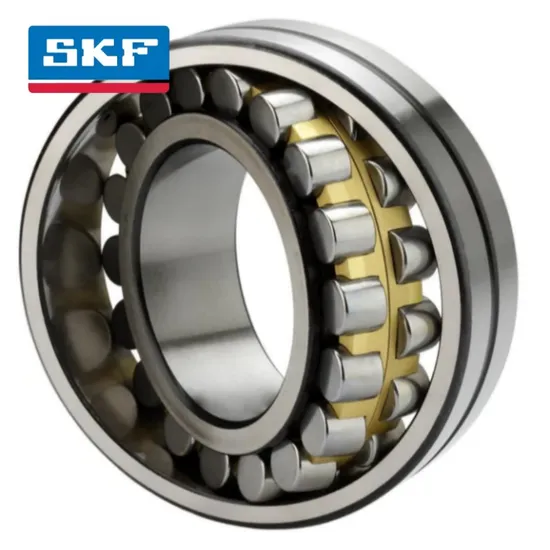
The base designation 22214 identifies a spherical roller bearing in the 222 dimension series with a 70 mm bore, 125 mm outside diameter, and 31 mm width. The sealed type configuration means integrated contact seals protect the rolling elements from particulate ingress without requiring external seal housings. Bearing steel construction provides the high-carbon chromium metallurgy necessary for fatigue resistance under the cyclic loading conditions typical of caster rolls. The self-aligning outer raceway allows the bearing to compensate for shaft deflection and housing bore misalignment, reducing edge loading on the rollers.
The Cost of Ignoring Suffix Details
Procurement decisions based solely on the base number 22214 while ignoring suffix segments lead to sealed bearings being replaced with open types, or correct clearance being swapped for standard. Under ISO 15243 failure classification, contamination-related surface damage and lubrication starvation rank among the most common root causes of premature bearing failure. [NEED_CITE: ISO 15243 bearing failure mode classification] A mis-specified bearing on a caster segment roll can cause roller lock-up, forcing an emergency shutdown that idles the entire casting line. Correct specification verified through authorized documentation prevents these catastrophic outcomes and protects warranty coverage.
How We Support Verification at Every Stage
We source the 22214SWREAg2E4 spherical roller bearing for continuous caster through authorized distributor channels with full batch and lot traceability. Our cross-reference database matches not just base numbers but clearance class, cage material, and seal type across SKF, NSK, FAG, TIMKEN, NTN, and KOYO so substitutions maintain field performance. Before shipment, buyers receive material certificates, dimensional inspection reports, and country-of-origin documentation needed for import compliance. For teams unfamiliar with suffix decoding, we provide guidance on what each segment means and why it matters for the specific application.
Documentation & Authenticity
- Supplier Certificate of Conformity tied to the specific production batch of the 22214SWREAg2E4
- Third-party dimensional inspection report verifying bore, outside diameter, and width tolerances
- Material certificate confirming bearing steel grade and heat treatment compliance
- Country-of-origin documentation supporting import customs clearance and buyer verification requirements
- QR code verification pathway through the brand official app for authenticity confirmation
Storage, Handling & Mounting
- Keep the sealed 22214SWREAg2E4 in its original packaging until mounting to prevent seal lip damage from dust or moisture exposure during storage
- Handle the 70 mm bore bearing with clean gloves to avoid contaminating the seal surfaces before installation
- Use induction heating for the inner ring mounting rather than cold press to avoid seal deformation on this sealed-type configuration
- Store in a climate-controlled area away from direct sunlight to protect the seal elastomer from UV degradation and premature hardening
- Verify shaft and housing tolerances before mounting to ensure the sealed bearing operates within its designed clearance envelope under caster thermal conditions
Start Your Technical Review
Share your continuous caster application parameters including roll position, operating temperature, and load data so we can verify the 22214SWREAg2E4 spherical roller bearing for continuous caster matches your specification. If you are working from an OEM equipment number, provide it for a full cross-reference check including seal type and clearance alignment. Request the documentation package and confirm batch availability before placing your order.
Frequently Asked Questions
Q: How do I verify authenticity of sealed spherical roller bearings against cloned QR codes?
A: Scanning the QR code through the manufacturer official app connects to their verification database, confirming the batch and production date. We supply bearings through authorized channels with traceable documentation, and we guide buyers on distinguishing genuine packaging features from counterfeit clones.
Q: Why must clearance and seal type be matched alongside the base number during cross-reference?
A: Matching only the base number ignores application-critical specifications. A standard clearance bearing installed where thermal expansion requires C3 clearance will bind as temperatures rise, while an open bearing substituted for a sealed type will allow contamination ingress that destroys the raceway prematurely.
Q: What does each segment of a spherical roller bearing designation mean?
A: The base number identifies the bearing type and dimensions. Subsequent suffix segments indicate internal design features such as cage type, clearance class, seal configuration, and precision grade. Each suffix must be verified against the manufacturer catalog for accurate specification matching.
Q: How do sealed and open spherical roller bearings differ for continuous caster applications?
A: Sealed bearings retain factory lubricant and block scale and coolant ingress, extending service intervals in contaminated environments. Open bearings require external sealing solutions and more frequent re-lubrication, which may not be practical in all caster roll positions.
Submit Your Application Data for Specification Review
Send your operating parameters or OEM equipment number to our engineering team for a complete cross-reference and documentation review.
Contact: Sales team available through authorized inquiry channels.