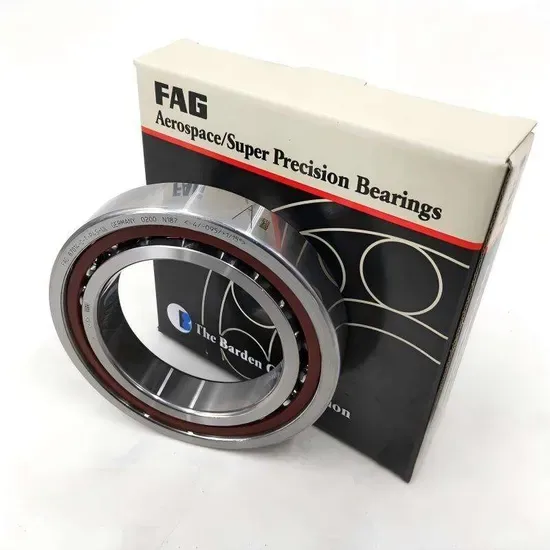
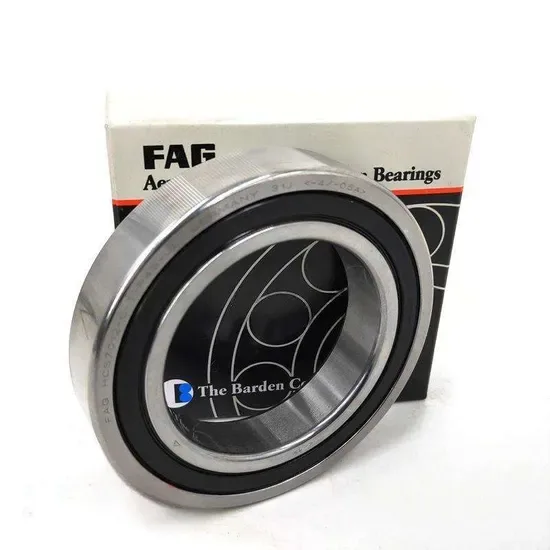
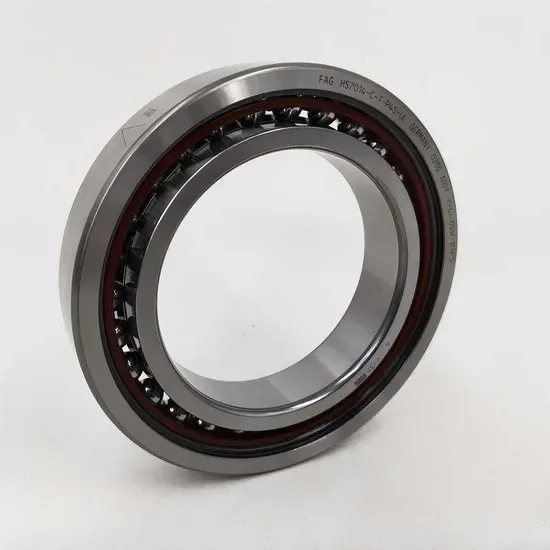
Description
Factory-Authorized Traceability — Sourced through verified distributor networks, each HC7006-C-T-P4S shipment includes a documented procurement chain and traceable batch identity for import compliance and authenticity assurance.
Technical Specifications
| Parameter | Value |
|---|---|
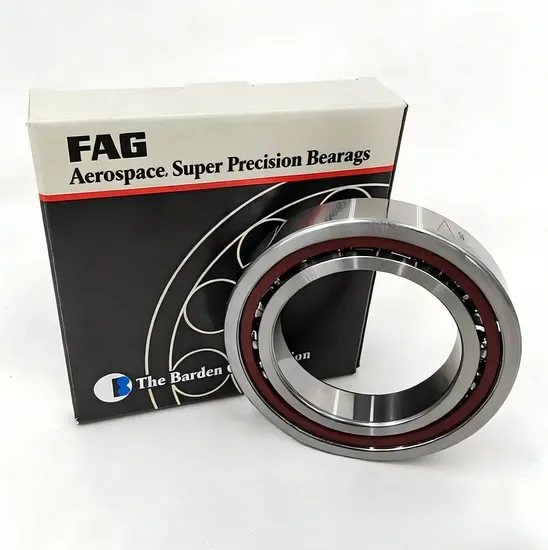
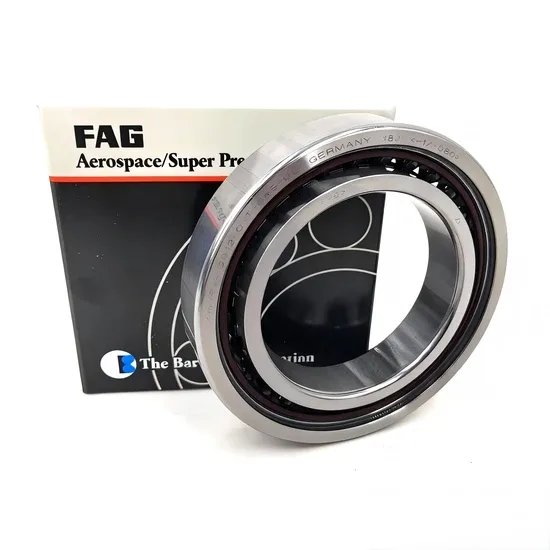
| Designation | FAG HC7006-C-T-P4S |
| Bearing Type | Angular Contact Ball Bearing |
| Bore Diameter (d) | 30 mm |
| Outside Diameter (D) | 55 mm |
| Width (B) | 13 mm |
| Weight | 0.120 kg |
| Cage Material | Ceramic |
| Clearance Class | Standard (CN) |
| Precision Class | P4S |
| Contact Angle | 15° |
| Number of Rows | Single Row |
| Origin | China |
Note: The suffixes "HC", "T", and "S" in the P4S designation are specialized manufacturing codes. While P4 confirms ISO tolerance class 4 accuracy, the full suffix definition requires validation against the manufacturer’s latest technical catalog for specific cage or preload nuances.
Application Suitability
| Industry | Typical Applications |
|---|---|
| Industrial Machinery | High-speed CNC milling spindles, precision grinding heads |
| Robotics | Joint actuators requiring minimal radial runout |
| Precision Equipment | Optical measurement devices, high-frequency spindles |
| Automotive Manufacturing | High-speed robotic welding arm joints |
What a Precision Mismatch Costs on a High-Speed Spindle
A P5 bearing in a P4 application doesn’t just run hotter; it destroys the shaft.
In high-speed machining, the difference between a smooth finish and a scrapped batch often comes down to microns of runout. Procurement teams frequently match the base number "7006" but overlook the precision suffix. I once saw a Riyadh workshop replace a ceramic hybrid spindle bearing with a standard steel equivalent because the supplier only matched the bore and OD. The result was thermal runaway within two hours. The spindle seized, the shaft was ruined, and a week of aerospace production was lost [NEED_CITE: thermal growth impact on spindle runout]. This FAG HC7006-C-T-P4S ceramic angular contact ball bearing is engineered specifically to prevent such catastrophic selection errors.
Matching the 15° Angle to Radial-Dominant Loads
The "C" in this FAG HC7006-C-T-P4S ceramic angular contact ball bearing indicates a 15° contact angle. In spindle applications, where radial loads from cutting forces often exceed axial thrust, a 15° angle provides a superior balance. It offers higher radial capacity than 25° (AC) variants while maintaining enough axial stiffness to handle light thrust. This specific geometry minimizes friction heat generation at speeds exceeding 20,000 RPM. When we source these units, we verify the contact angle code against the application’s load vector, ensuring the bearing doesn’t skid or overheat under high-speed radial dominance.
Operating Environment: Heat, Speed, and Ceramic Advantage
High-speed spindles generate intense internal friction. Steel balls at these speeds suffer from centrifugal expansion, increasing contact stress and temperature. Ceramic rolling elements, as specified in this unit’s construction, are lighter and harder than steel. They resist centrifugal deformation, significantly reducing the friction heat transferred to the spindle housing. This allows for higher limiting speeds and longer lubrication intervals [NEED_CITE: ceramic vs steel bearing elements in high-speed applications]. Furthermore, P4 precision ensures that the inner and outer rings are concentric to within extremely tight tolerances, preventing the vibration that accelerates cage wear in high-RPM environments.
Decoding the P4S Precision and Ceramic Build
The "P4S" designation signifies a precision level that exceeds standard industrial grades (P0 or P6), adhering to ISO 492 class 4 tolerances for both dimensional and running accuracy. This is non-negotiable for spindles where tool tip runout must be near zero. The ceramic components (likely silicon nitride balls) provide electrical insulation and reduced density. This combination is critical for VFD-driven motors where stray currents can cause fluting, and for spindles where thermal stability is paramount. The single-row design requires that these bearings be mounted in sets (DB, DF, or DT) to handle bi-directional axial loads, a configuration that must be pre-calculated for stiffness.
The Hidden Cost of Counterfeit "Precision" Bearings
The market is flooded with bearings marked "P4" that fail to meet ISO 492 class 4 standards upon inspection. A counterfeit bearing may have the correct outer dimensions but lack the raceway roundness required for high-speed stability. This leads to premature fatigue, characterized by spalling and eventual cage disintegration [NEED_CITE: ISO 15243 bearing failure mode classification]. In a precision grinding environment, such a failure doesn’t just mean replacing a $50 part; it means scrapping a $10,000 workpiece and missing a delivery deadline. Authenticity verification isn’t a luxury; it’s a production necessity.
Why Maintenance Engineers Source Through Us
We don’t just ship boxes; we provide the engineering context required for installation. Our sourcing strategy focuses on authorized distributor channels, meaning every FAG HC7006-C-T-P4S ceramic angular contact ball bearing comes with a traceable lineage. We provide cross-reference validation to ensure that if a substitution is necessary, it matches not just the bore, but the clearance, cage material, and precision class. We assist with origin identification for customs and provide guidance on QR-code verification through official brand apps. We treat every inquiry as a technical consultation, ensuring the bearing you install is the one the OEM engineer actually specified.
Documentation & Authenticity
- Supplier Certificate of Conformity (COC): Confirms the specific batch and lot number matches the invoice, essential for traceability in ISO-certified workshops.
- Dimensional Inspection Verification: Guidance on checking critical P4 runout tolerances before mounting to ensure no shipping damage occurred.
- Country-of-Origin Documentation: Complete paperwork package to support import compliance and customs clearance in regions with strict origin rules.
- Anti-Counterfeit Verification Support: Step-by-step instructions for using the manufacturer’s official app to scan QR codes and verify the holographic seal integrity.
Storage, Handling & Mounting
- Climate Control for P4 Precision: Store the HC7006-C-T-P4S in a temperature-stable environment; thermal shock from moving a cold bearing to a warm shop floor can distort the raceway geometry before mounting.
- Cleanliness Protocol: The ceramic elements and P4 raceways are unforgiving of debris; mounting must occur in a clean area, ideally using lint-free gloves to prevent skin oils from initiating corrosion on the steel rings.
- Mounting Force Direction: When pressing the inner ring onto the spindle shaft, ensure force is applied only to the inner ring face; transmitting force through the ceramic balls will fracture the raceway contact points.
- Preload Verification: If mounting in a DB (back-to-back) set, verify the axial preload matches the spindle design requirements; incorrect preload will generate excessive heat or allow chatter during cutting.
Secure Your Spindle’s Performance
To ensure the FAG HC7006-C-T-P4S ceramic angular contact ball bearing meets your specific speed and load requirements, please share your spindle’s RPM range, expected cutting loads, and OEM equipment number. Our technical team will review the application parameters, confirm the cross-reference validity, and provide a quotation including lead time and authenticity documentation.
Frequently Asked Questions
Q: How can I verify if the "P4S" marking on my FAG bearing is genuine?
A: Genuine high-precision FAG bearings feature specific laser-etched markings and holographic seals. We recommend scanning the QR code on the packaging using the official manufacturer app, which will cross-reference the serial number with the production database. We also provide guidance on visual inspection of the cage and raceway finish.
Q: Why is the 15° contact angle (C suffix) preferred over 25° for some spindles?
A: A 15° contact angle offers lower friction and higher limiting speeds compared to a 25° angle, making it ideal for high-speed, light-to-medium radial load applications like milling spindles. A 25° angle provides higher axial stiffness but generates more heat at high RPM.
Q: Can I mix steel and ceramic bearings in the same spindle set?
A: No. Mixing rolling element materials creates a mismatch in thermal expansion rates and stiffness, leading to uneven load distribution and rapid failure. Always replace the full set with identical specifications.
Q: What does the "HC" or "T" suffix imply in this context?
A: These suffixes typically denote specialized manufacturing variants or specific cage materials designed for unique thermal or speed requirements. While P4 defines the precision, these specific codes should be confirmed against the machine tool builder’s manual to ensure compatibility with the spindle’s cooling and lubrication system.
Q: Do you provide cross-references for other brands like SKF or NSK?
A: Yes. We provide interchange comparisons that match the base dimensions, precision class (P4/ABEC 7), contact angle (15°), and ceramic composition across major brands to ensure functional equivalence if the primary brand is unavailable.
Technical Sourcing Inquiry
Submit your application details or OEM part number today to receive a verified sourcing proposal and technical cross-reference report. Contact us through your preferred procurement channel or via our direct sales desk.