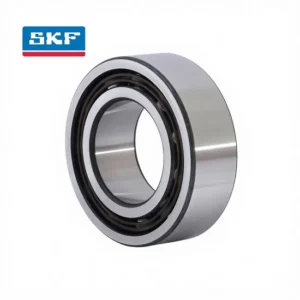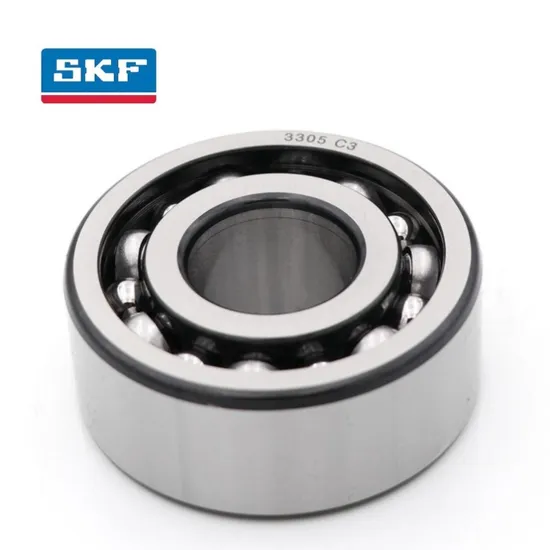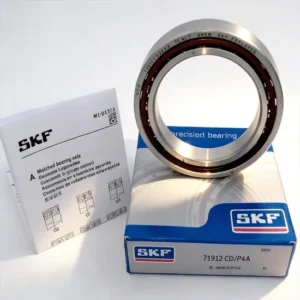
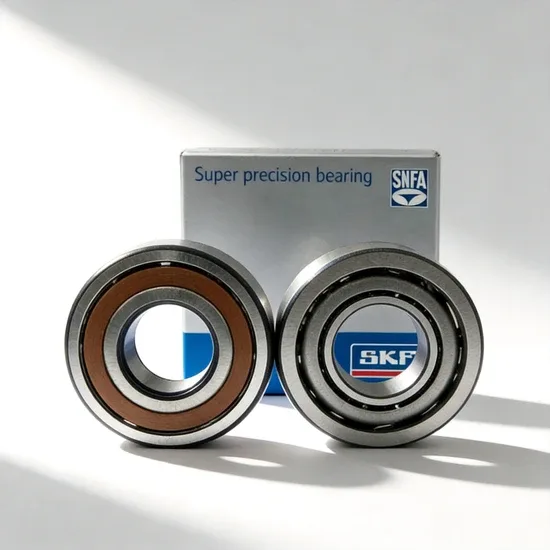
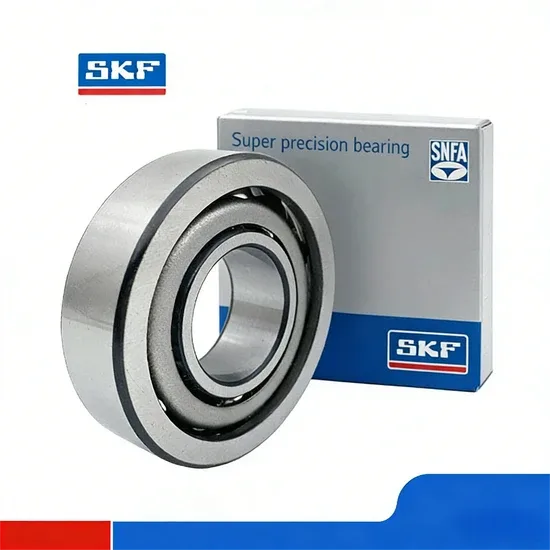
Description
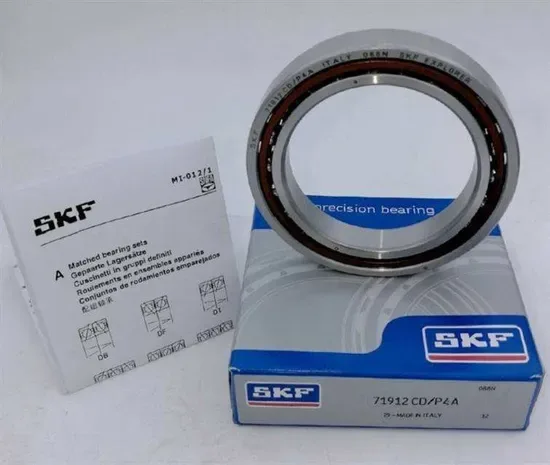
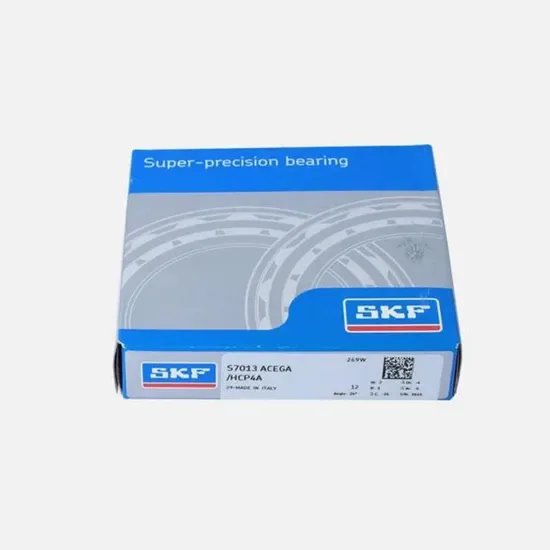
Authorized Channel Procurement — Every SKF 7013 CD/P4ADBC ships with a full batch traceability chain back to the manufacturer’s production facilities, not a repackaged mystery lot.
Technical Specifications
| Parameter | Value |
|---|---|
| Designation | SKF 7013 CD/P4ADBC |
| Bearing Type | Angular Contact Ball Bearing |
| Bore Diameter (d) | 65 mm |
| Outside Diameter (D) | 100 mm |
| Width (B) | 18 mm |
| Number of Rows | Single Row |
| Contact Angle | 15° |
| Precision Class | P4A (ISO tolerance class 4 with enhanced running accuracy) |
| Arrangement | DBC (to be verified against manufacturer catalog for exact pairing configuration) |
| Origin | China |
| Weight | 0.100 kg |
Note: The DBC suffix in this identifier has not been independently confirmed. Buyers should verify the exact pairing arrangement and preload class against the official SKF catalog before finalizing specifications for precision spindle or turbocharger assemblies.
Application Suitability
| Industry | Typical Applications |
|---|---|
| Machine Tool Manufacturing | High-speed spindle front and rear support positions |
| Power Generation | Genset turbocharger shaft bearing positions |
| Precision Equipment | Robotics rotary joints, high-speed pump impeller supports |
| Steel & Metallurgy | Rolling mill guide roller precision positions |
When a Suffix Letter Decides Whether a Turbo Survives Its First Month
Ignoring the DBC pairing code on a P4A angular contact bearing is not a paperwork problem — it is a thermal failure waiting to happen.
I watched a genset rebuilder in Riyadh replace a turbocharger shaft bearing with a matched pair that had the right base number but the wrong pairing arrangement. The 15° contact angle was correct, the P4A precision was correct, but the preload configuration did not match the OEM specification. Within weeks the shaft began vibrating at operating temperature, the rotor contact the housing, and the entire turbo assembly had to be scrapped. The shop absorbed the warranty claim and lost a fleet contract [NEED_CITE: angular contact bearing pairing preload mismatch failure modes per ISO 15243]. That is the difference a single suffix group makes on an SKF 7013 CD/P4ADBC.
Matching the Bearing to High-Speed Shaft Reality
Turbocharger and spindle applications impose a specific combination of demands: predominantly radial loads at very high speeds, moderate axial thrust from impeller or cutting forces, and tight thermal envelopes where friction heat has nowhere to escape. The SKF 7013 CD/P4ADBC addresses this with a 15° contact angle that generates less internal friction than higher-angle variants, paired with P4A running accuracy that keeps radial runout within the tight band required for shafts spinning well above typical motor speeds. When a Dubai MRO team asked us to cross-reference an OEM turbo bearing, we confirmed that clearance class, cage material, and precision grade all had to align — not just the bore and OD — before the substitution would hold up in the field.
Operating Conditions That Expose Weak Substitutions
High-speed shafts see predominantly radial loads with axial components that shift direction during startup and shutdown transients. Speed generates internal heat that expands the inner ring, tightening clearance and increasing contact stress unless the original specification accounted for thermal growth. Lubrication in turbo positions is typically oil-fed, meaning the bearing must tolerate oil mist or jet delivery without cage instability. Sealing in these positions is often handled by the housing labyrinth rather than integrated bearing seals, so contamination defense depends on the surrounding assembly. Installation tolerances on 65 mm shafts leave minimal room for interference fit errors — too tight and residual clearance vanishes at temperature; too loose and the inner ring creeps under load [NEED_CITE: bearing mounting interference fit and residual clearance relationship].
What the Core Specifications Actually Mean in Service
The 15° contact angle indicated by the CD designation is the lowest-friction option in the angular contact family, chosen when radial loads dominate and axial thrust is secondary. This is why spindle front bearings and turbo shaft positions favor it over 25° alternatives — less contact stress means less heat at sustained high speeds. The P4A precision class goes beyond standard ISO class 4 dimensional tolerances by adding a running accuracy specification, meaning bore and OD are held tight and radial runout is controlled to a level that prevents vibration signature issues in precision spindles. The optimized internal design behind the CD suffix improves load distribution across the ball set, reducing stress concentration on individual contact points during high-speed operation. Pairing configuration — the DBC group — dictates how two bearings share axial load and establish shaft rigidity, and getting this wrong negates every other specification advantage.
The Hidden Price Tag Behind a Wrong Suffix Match
A correct SKF 7013 CD/P4ADBC from a traceable source delivers the L10 life predicted by ISO 281 calculations for the given load and speed conditions. A counterfeit or misconfigured substitute does not fail gracefully — it fails catastrophically. Soft inner rings from unverified sources show spalling within weeks. Mismatched pairing preload creates either excessive shaft rigidity that transmits vibration into the tooling, or insufficient rigidity that allows shaft deflection under cutting loads. In turbo applications, premature cage failure from clearance collapse at temperature can seize the shaft and destroy the impeller. These failures are classified under ISO 15243 fatigue and fracture categories, and they void equipment warranties the moment a non-OEM bearing is identified in the failure report [NEED_CITE: ISO 15243 rolling bearing damage classification categories].
How We Source This Bearing Differently
Our procurement model means every SKF 7013 CD/P4ADBC arrives through authorized distributor channels with documentation that traces back to the production batch — not through parallel trading networks where provenance goes dark. When a buyer in the Middle East receives a precision angular contact bearing, they need more than a box with a brand logo. We provide QR code verification pathways through the manufacturer’s official app so the buyer can scan and confirm authenticity on arrival. Our cross-reference database matches not only the base designation but also clearance class, cage material, and precision suffix — so when a maintenance engineer asks for a substitute, every parameter aligns. Country-of-origin documentation ships with every order for import compliance, and dimensional inspection reports confirm running accuracy before the bearing leaves our facility [NEED_CITE: counterfeit bearing detection methods using manufacturer verification apps].
Documentation & Authenticity
- Supplier Certificate of Conformity tied to the specific production batch of this P4A bearing
- Third-party runout inspection confirming P4A running accuracy before shipment
- Material certificate verifying bearing steel composition per ISO 683-17
- Country-of-origin documentation supporting import customs clearance for Middle East and African ports
- QR code verification pathway through the official SKF app for on-site authenticity confirmation
Storage, Handling & Mounting
- Keep the matched pair sealed in original packaging until the moment of mounting — premature opening risks contaminating the 15° contact angle raceways and obscuring factory pairing marks
- Store flat in a climate-controlled environment to prevent brinelling marks on the precision-ground P4A raceways from sustained point loading
- Use clean lint-free gloves when handling the 65 mm bore — fingerprint acids etch bearing steel and become initiation points for corrosion under oil film
- Confirm shaft and housing tolerances match P4A requirements before pressing the inner ring; interference fit errors on this precision class are not recoverable
- For oil-lubricated turbo positions, verify oil feed compatibility before first run — residual preservative on open bearings must be flushed to prevent contamination of the oil circuit
Starting the Conversation
Share your application parameters — shaft speed, operating temperature, load spectrum, and OEM equipment number — so we can confirm that the SKF 7013 CD/P4ADBC pairing configuration matches your specific assembly requirements. If you are cross-referencing an existing bearing, provide the full original designation including all suffix groups so we can verify clearance, cage, and precision alignment before quoting. Request the documentation package and country-of-origin confirmation early in the process to avoid import delays at destination.
Frequently Asked Questions
Q: How can I verify the authenticity of a SKF 7013 CD/P4ADBC when it arrives?
A: SKF provides an official mobile app with QR code scanning capability. Each genuine bearing carries a traceable QR code linked to its production batch. Scan the code on arrival to confirm the designation, production facility, and batch details match your order documentation. Counterfeit bearings often feature cloned QR codes that redirect to fake verification pages — always use the official app downloaded from the manufacturer’s verified source.
Q: What does the DBC suffix mean for bearing pairing arrangements?
A: The DBC suffix group relates to how paired angular contact bearings are arranged and preloaded as a set. Exact pairing configuration and preload class should be confirmed against the current manufacturer catalog, as suffix conventions can vary by product generation and series. This confirmation is critical before installation in turbocharger or spindle applications where preload directly determines shaft rigidity and thermal behavior.
Q: What is the difference between P4A and standard P4 precision?
A: P4A meets ISO tolerance class 4 dimensional requirements and adds enhanced running accuracy specifications beyond standard P4. This means tighter control of radial runout and rotational accuracy, which is essential for high-speed spindle and turbo shaft applications where vibration signature and shaft deflection must be minimized.
Q: Why does contact angle matter when substituting angular contact bearings?
A: The 15° contact angle of the CD designation is optimized for predominantly radial loads at high speeds, generating less friction heat than 25° (AC/ACD) alternatives. Substituting a higher contact angle in a spindle or turbo position increases axial rigidity but also increases internal friction and heat generation, potentially leading to thermal runaway in tight thermal envelopes.
Q: Can I cross-reference this bearing with other brands for interchange?
A: Cross-referencing is possible across major brands, but every substitution must match not only the base dimensions but also the contact angle, precision class, pairing arrangement, and clearance. A partial match on designation alone — ignoring suffix groups — is how premature failures happen in the field.
Confirm Your Application Parameters Today
Send us your OEM equipment number or full operating conditions, and we will verify pairing configuration, confirm batch availability, and provide the complete documentation package for your next SKF 7013 CD/P4ADBC requirement.