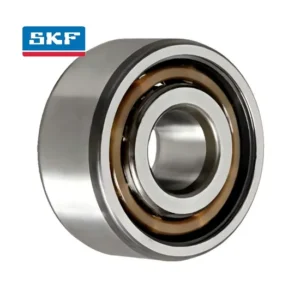
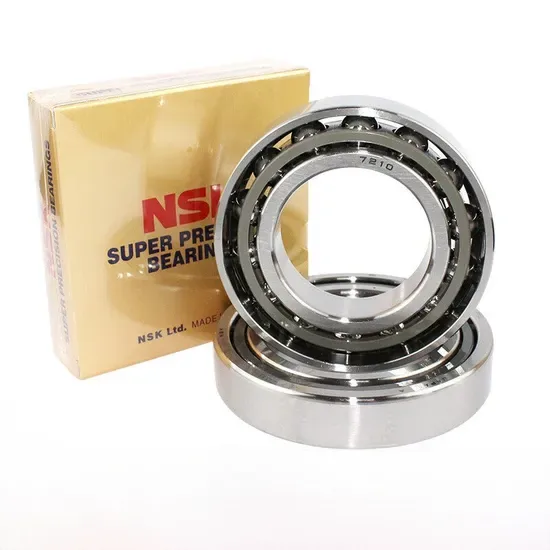
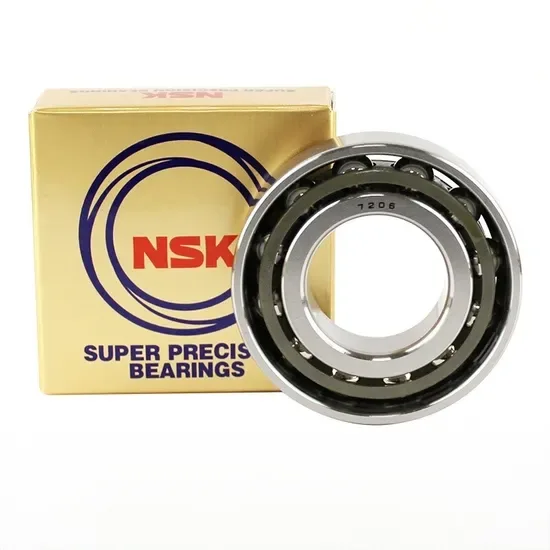
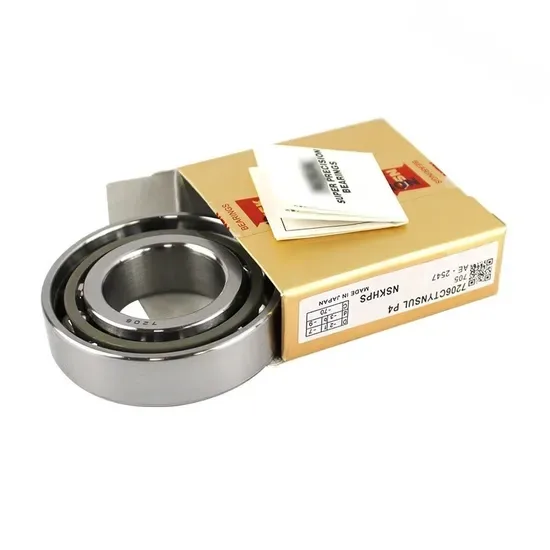
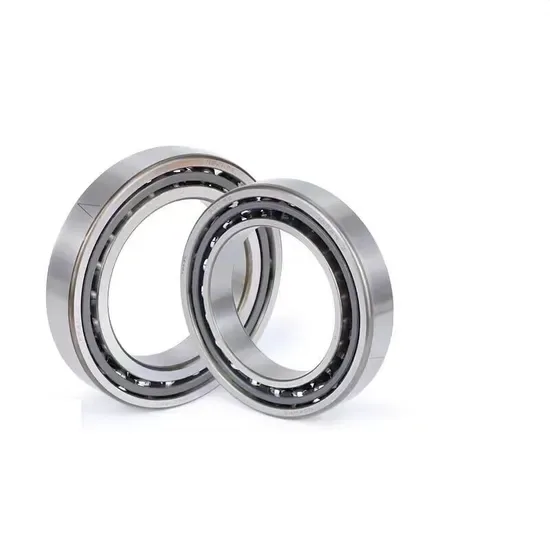
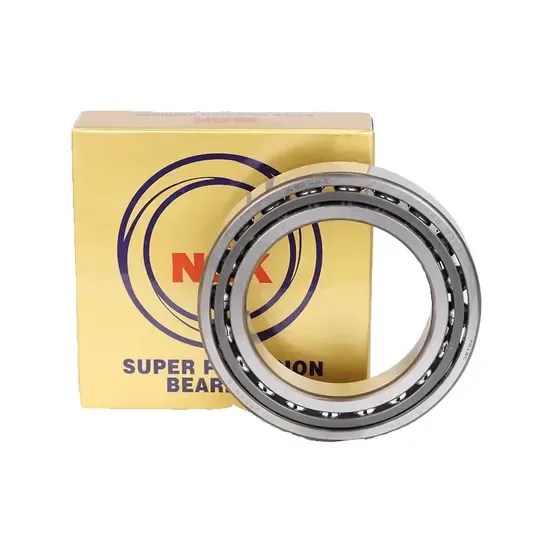
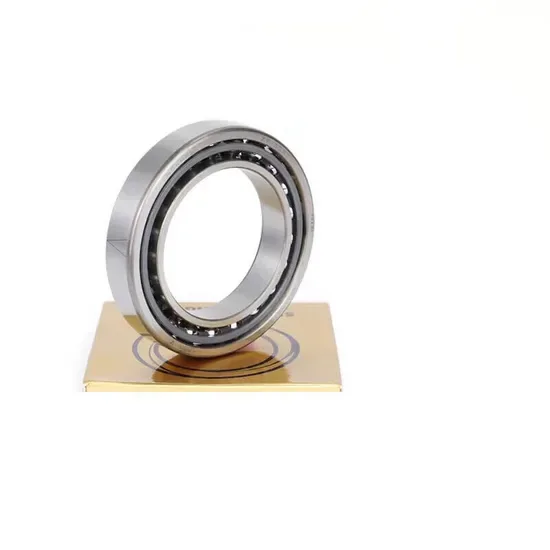
Description
Authorized Channel Traceability — Every NSK 7900A5SN24TRSUELP3 ships with batch-level documentation traceable to the manufacturer’s official distribution network.
Technical Specifications
| Parameter | Value |
|---|---|
| Designation | NSK 7900A5SN24TRSUELP3 |
| Bearing Type | Angular Contact Ball Bearing |
| Bore Diameter (d) | 10 mm |
| Outside Diameter (D) | 22 mm |
| Width (B) | 6 mm |
| Weight | 0.009 kg |
| Number of Rows | Single |
| Contact Angle | 25° |
| Precision Class | P3 |
| Seal or Shield Type | Separated |
| Lubrication Compatibility | Grease / Oil |
| Load Direction | Combined Radial and Axial |
| Material | Bearing Steel |
| Origin | Japan |
Note: Certain suffix designations within this identifier require manufacturer catalog cross-verification for precise cage and preload specifications.
Application Suitability
| Industry | Typical Applications |
|---|---|
| Machine Tool Manufacturing | High-speed grinding spindle nose, precision milling spindle |
| Robotics & Automation | High-precision joint actuator, harmonic drive support |
| Metrology & Measurement | CMM rotary probe head, optical scanner gimbal axis |
What a 25° Contact Angle Mismatch Costs on a Grinder Spindle
The difference between a spindle that holds tolerance for two years and one that seizes in three weeks often lives in the suffix.
I once stood in a Bavarian workshop watching a maintenance engineer pull a melted PEEK cage out of a high-frequency grinder. The replacement bearing had the correct base number but standard steel balls instead of ceramic hybrids, and the wrong preload class. At 30,000 RPM, centrifugal forces pushed the balls into skidding contact, generating friction heat that the cage could not survive [NEED_CITE: high-speed angular contact ball bearing failure modes in machine tool spindles]. The NSK 7900A5SN24TRSUELP3 angular contact ball bearing exists precisely to prevent this class of failure—its 25° contact angle and P3 precision class are engineered for the combined loading and minimal runout demands of spindle service, but only if the entire suffix chain is honored.
How the NSK 7900A5SN24TRSUELP3 Matches Precision Spindle Demands
This bearing occupies a specific niche: small-bore, high-speed applications where radial and axial loads arrive simultaneously and runout tolerance is measured in microns. The 10 mm bore and 22 mm OD place it squarely in the miniature precision category common in grinding spindles, robotic wrist joints, and metrology equipment. The 25° contact angle delivers a balanced stiffness profile—more axial capacity than a 15° variant without the friction penalty of a 40° thrust-oriented design. When sourcing replacements for OEM equipment, we cross-reference not just the base designation but the full suffix string to ensure cage material, preload, and precision class all align with the original spindle builder’s intent.
Speed, Heat, and the Precision Threshold
The Thermal-Runout Relationship at High RPM
In spindle environments, rotational speed drives a thermal cascade. Inner ring temperature climbs faster than the housing, and if the bearing’s initial clearance and preload are not matched to that differential expansion, the contact angle shifts under load. At sustained high RPM, oil-air or oil-mist lubrication becomes mandatory—grease-packed cavities cannot shed heat fast enough. The separated design of this bearing facilitates precise preload control during mounting, which is critical because even a slight axial displacement during press-fitting can alter the running accuracy the P3 class was manufactured to deliver [NEED_CITE: thermal expansion effects on angular contact bearing preload in spindle applications]. Installation practice matters as much as the bearing itself.
Reading the Suffix Stack
The A5 designation confirms the 25° contact angle, which governs how axial force translates into internal contact stress. The LP3 suffix places this bearing in a precision tier above P4, meaning bore and OD tolerances, as well as running accuracy, are held to tighter bands than standard machine-grade bearings. This matters directly for spindle nose runout—a P5 or P6 bearing in the same envelope would allow radial displacement that shows up as chatter marks on a ground surface. The bearing steel construction provides the raceway hardness needed for sustained contact stress at speed, while the single-row, separated configuration allows paired mounting arrangements to be set with controlled preload on the bench.
When the Wrong Cage Destroys a Spindle
Cage selection at high speed is a thermal decision, not just a mechanical one. A pressed steel cage may suffice at moderate RPM, but as speed climbs, cage pocket friction and lubricant starvation generate localized heat that softens the cage material. Phenolic or engineered polymer cages reduce weight and friction, but they have temperature ceilings. If a cross-reference swap ignores the cage suffix, the replacement may pass dimensional inspection yet fail thermally within the first duty cycle. We verify cage material against the application’s speed-temperature envelope before confirming interchangeability.
The Hidden Cost of an Unverified Supply Chain
Counterfeit angular contact bearings have become sophisticated—cloned QR codes, soft inner rings that pass a quick hardness check but lack through-hardening, and packaging that fools even experienced buyers. The damage is rarely immediate. A counterfeit bearing may run acceptably for weeks before subsurface fatigue initiates spalling on the inner raceway, sending metal debris through the spindle’s lubrication circuit. Per ISO 15243 failure classification, this falls under material fatigue accelerated by substandard metallurgy—a root cause that is invisible until destructive analysis [NEED_CITE: ISO 15243 rolling bearing damage classification]. The unplanned downtime, spindle rebuild, and scrapped workpieces dwarf the savings on the bearing itself.
Why Procurement Engineers Specify Our Channel
We source the NSK 7900A5SN24TRSUELP3 angular contact ball bearing through authorized distributor channels, meaning every unit carries traceable batch documentation back to the manufacturer. Our cross-reference database does not stop at base number matching—we verify clearance, cage material, and precision suffix across all six major brands so that an interchange decision is technically sound, not just dimensionally convenient. For import-dependent buyers, we provide country-of-origin documentation and HS code support to clear customs without delay. Every shipment includes material certification and dimensional inspection data so you can verify before you mount.
Documentation & Authenticity
- Supplier Certificate of Conformity with full batch and lot traceability tied to the specific NSK 7900A5SN24TRSUELP3 units shipped
- QR code verification pathway through the official NSK authentication app for field-level counterfeit screening
- Dimensional inspection report confirming P3-class bore, OD, and running accuracy before dispatch
- Country-of-origin certificate supporting import compliance and end-customer audit requirements
- Material certificate verifying bearing steel grade and heat treatment compliance
Storage, Handling & Mounting
- Keep this P3-precision bearing sealed in its original packaging until the moment of mounting; early exposure to workshop humidity degrades the raceway surface finish critical for high-speed spindle service
- Handle with lint-free gloves—fingerprints on the 10 mm bore introduce acidic contamination that initiates corrosion under the thin oil film at operating temperature
- For paired mounting arrangements, verify axial preload setting on the bench before pressing into the spindle housing; the separated design requires controlled clamping to maintain the specified contact angle geometry
- Store horizontally in a climate-controlled environment below 60% relative humidity to prevent condensation on the exposed steel surfaces of this open-type bearing
- Confirm spindle housing and shaft tolerances match the P3 precision class—oversize shaft fit will preload the bearing beyond its design envelope and generate immediate thermal binding
Request a Technical Quotation
Share your spindle speed, load profile, and operating temperature so we can confirm the NSK 7900A5SN24TRSUELP3 angular contact ball bearing is the correct match—or identify a superior alternative from our cross-brand interchange database. If you are replacing an existing bearing, send the OEM equipment number and we will verify the full suffix specification against the original build documentation.
Frequently Asked Questions
Q: How do I confirm the authenticity of this NSK bearing after delivery?
A: Every unit we supply carries a verifiable QR code linked to NSK’s official authentication system. We also provide batch-level Certificate of Conformity so you can cross-check lot numbers against the manufacturer’s production records.
Q: Can I substitute a different brand for this angular contact ball bearing?
A: Cross-brand interchange is possible, but the substitution must match not only the base dimensions but also the 25° contact angle, the P3-equivalent precision class, and the cage material suited to your spindle speed. We perform this full-suffix verification before recommending any interchange.
Q: What is the difference between P4 and P3 precision for spindle applications?
A: P3 precision holds tighter tolerances on bore diameter, outside diameter, and running accuracy than P4. In high-speed spindle service, this translates to less radial and axial runout, which directly affects surface finish quality and tool life.
Q: Why does the contact angle matter if the base number is the same?
A: A 15° contact angle offers higher radial capacity with lower axial stiffness, while 25° balances both loads with moderate friction. Installing a 15° variant in a spindle designed for 25° axial support can cause premature raceway wear under thrust loading [NEED_CITE: contact angle selection criteria for angular contact ball bearings].
Q: What documentation ships with my order?
A: Standard documentation includes Certificate of Conformity, material certificate, dimensional inspection report, batch traceability, and country-of-origin papers. Additional third-party inspection can be arranged for project-specific requirements.
Secure Your Spindle Uptime
Send us your application parameters or OEM part number today for a verified quote and complete technical documentation package.