Description
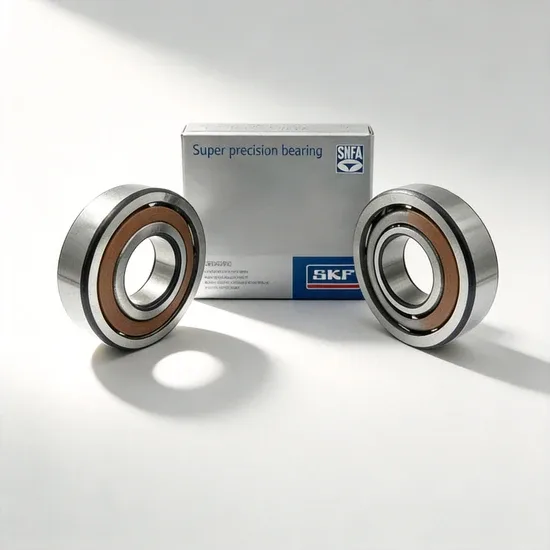
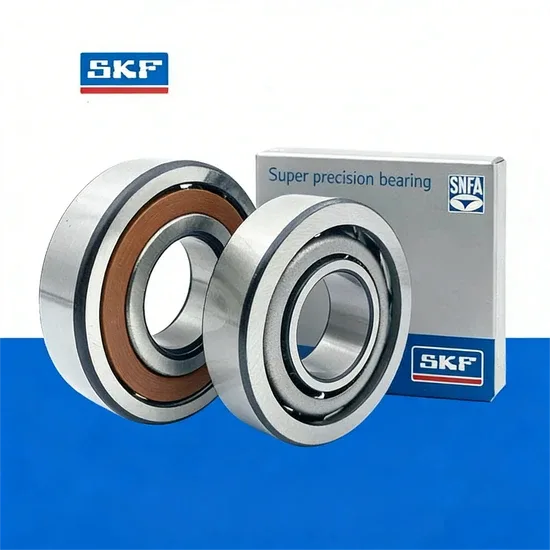
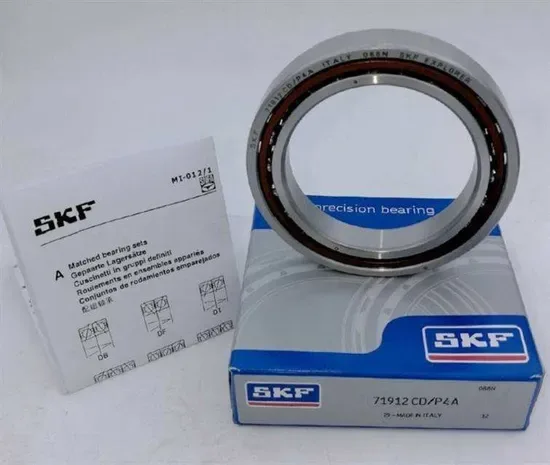
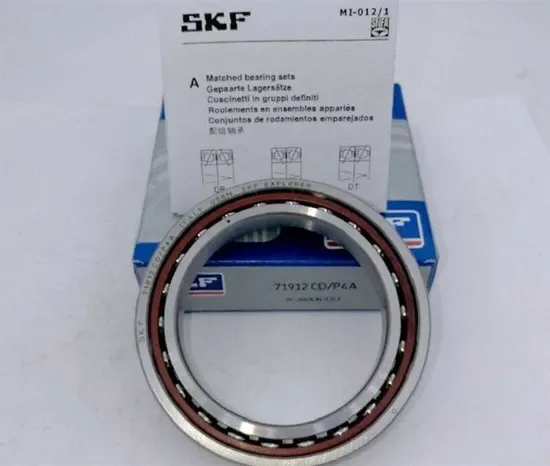
Authorized Channel Sourcing — Every SKF 7010 CD/P4atbta we ship traces back to verified distributor inventory with batch documentation intact.
Technical Specifications
| Parameter | Value |
|---|---|
| Designation | SKF 7010 CD/P4atbta |
| Bearing Type | Angular Contact Ball Bearing |
| Bore Diameter (d) | 50 mm |
| Outside Diameter (D) | 80 mm |
| Width (B) | 16 mm |
| Contact Angle | 15° |
| Precision Class | P4 (ISO 492 Class 4) |
| Cage Material | Ceramic |
| Number of Rows | Single Row |
| Arrangement | Single (no universal pairing suffix confirmed) |
| Seal or Shield Type | Open |
| Clearance Class | CN (standard) |
| Weight | 0.100 kg |
| Origin | China |
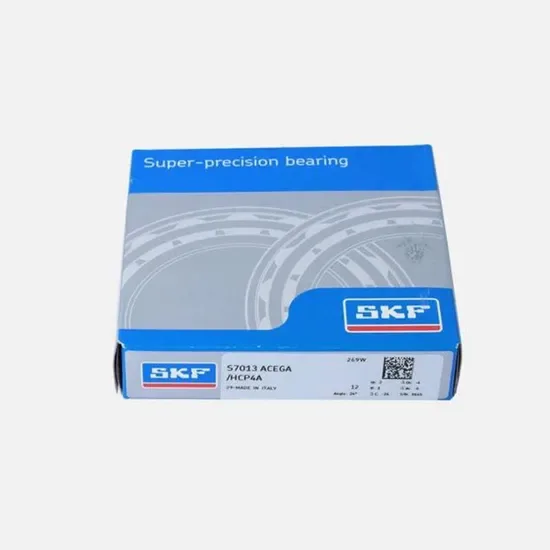
The "atbta" suffix appearing on the product label remains unverified against the current SKF precision bearing catalog and should be confirmed with the manufacturer’s technical documentation before final application approval.
Application Suitability
| Industry | Typical Applications |
|---|---|
| Machine Tool Manufacturing | CNC milling spindle front support, precision lathe headstock |
| Robotics | High-speed articulated joint actuators |
| General Industrial Machinery | High-speed pump impeller shaft support |
What Happens When Spindle Bearings Overlook the Ceramic Advantage
Ceramic balls cut centrifugal loading at high RPM, but only if every other specification aligns.
A grinding spindle running at 18,000 rpm generates significant internal heat even under light radial loads. When a maintenance team replaces a hybrid ceramic angular contact bearing with a standard steel-ball variant — matching only the bore and outside diameter — the steel balls impose higher centrifugal force on the outer raceway at speed. Thermal growth closes the internal clearance, and the bearing thermally binds within hours [NEED_CITE: thermal binding failure mechanism in high-speed spindle bearings]. The SKF 7010 CD/P4A angular contact ball bearing ceramic variant addresses this by using lower-density rolling elements that reduce raceway contact stress at elevated speeds, maintaining stable operating temperature through the duty cycle.
Matching Speed Demands to Internal Geometry
Spindle applications demand bearings that sustain dimensional stability across temperature gradients while managing combined loads. The SKF 7010 CD/P4A angular contact ball bearing ceramic configuration pairs a 15° contact angle with P4 precision grinding, producing low friction heat under predominantly radial loads typical of belt-driven and direct-drive spindle designs. We recently cross-referenced a spindle OEM’s original specification where the preload class and contact angle were both correctly documented, but the cage material had been substituted on a prior replacement — causing vibration above acceptable threshold at rated speed. Confirming cage type alongside contact angle and precision class prevents this category of field failure.
Thermal and Load Challenges at Spindle Speeds
At sustained high RPM, internal friction heat raises ring temperatures unevenly — the inner ring typically runs hotter than the outer ring because it is closer to the heat source and has a smaller thermal mass. This differential expansion reduces effective internal clearance. A bearing installed with standard CN clearance may lose all residual clearance under these conditions, particularly when the housing fit is tight. The 15° contact angle in the CD design generates less friction than a 25° or 40° alternative under radial-dominant loads, which directly reduces the thermal gradient problem [NEED_CITE: contact angle influence on friction heat generation in angular contact bearings]. Proper shaft and housing fits, combined with controlled preload in paired arrangements, remain essential to prevent thermal runaway in continuous-duty spindle service.
Decoding the Engineering Choices
The CD suffix specifies a 15° contact angle with optimized internal geometry, a configuration that balances axial capacity with low friction for speed-critical applications. P4 precision class meets ISO 492 Class 4 tolerances, delivering tighter bore and outside diameter deviation plus stricter running accuracy than P5 — critical for minimizing workpiece surface runout in finishing operations. Ceramic balls bring multiple advantages beyond density reduction: they exhibit higher stiffness, lower thermal expansion, and electrical insulation properties that prevent stray current pitting in motorized spindles. The open bearing configuration allows direct oil-air or oil-jet lubrication, which is the standard approach in high-speed spindle housings where heat extraction through lubricant flow is part of the thermal management strategy.
The Hidden Price of Specification Shortcuts
Substituting a P6 bearing where P4 was specified may not cause immediate failure, but the wider running accuracy tolerance produces chatter marks on machined surfaces that fail final inspection. Similarly, installing standard steel balls in a spindle originally designed for hybrid ceramic elements shifts the entire thermal balance, often leading to premature cage wear classified under ISO 15243 as surface distress from inadequate lubrication film [NEED_CITE: ISO 15243 bearing damage classification categories]. Counterfeit bearings with soft inner rings and cloned markings compound these risks — they may pass dimensional spot checks but fail catastrophically under sustained load because the material hardness never reached proper through-hardening specification. These failures rarely occur at startup; they emerge weeks into production, when unplanned downtime carries the highest cost.
Why Procurement Teams Verify Through Our Supply Chain
We source the SKF 7010 CD/P4A angular contact ball bearing ceramic through authorized distributor channels rather than open-market brokers, which means batch traceability documents accompany every shipment. Our cross-reference database checks more than base designation — we verify contact angle, cage material, precision class, and clearance together before confirming interchangeability with other brands. When import documentation requires country-of-origin certification, we provide the paperwork with the shipment rather than asking you to chase it afterward. Engineering support is available for application-specific selection questions, including preload pairing guidance and fit tolerance recommendations for your spindle housing dimensions.
Documentation & Authenticity
- Supplier Certificate of Conformity with batch and lot traceability matching the shipped SKF 7010 CD/P4atbta units
- Third-party runout inspection report confirming P4 running accuracy on bore and outside diameter before dispatch
- Country-of-origin documentation prepared for customs clearance and import compliance in your destination market
- QR code verification pathway via SKF official app, enabling your receiving team to authenticate markings on arrival
- Material certificate covering ring and ceramic ball specifications for quality record retention
Storage, Handling & Mounting
- Retain the original sealed packaging until mounting day; early exposure risks contamination of the open raceways on this P4 precision bearing
- Store flat in a temperature-stable environment below 60% relative humidity to protect the ceramic ball surfaces from moisture-related cage corrosion
- Use clean lint-free gloves during handling — fingerprint acids etch bearing steel and compromise the surface finish that P4 grinding achieved
- For oil-air lubricated spindle installations, flush the housing and feed lines before mounting to prevent particulate ingestion into the open bearing
- When pairing multiple single-row units in DB or DF arrangements, follow the factory-marked alignment lines on the ring faces to preserve the intended preload distribution
Request a Technical Quotation
Share your spindle operating parameters — speed range, load profile, lubrication method, and housing fit dimensions — so we can confirm suitability and verify any cross-reference requirements against your existing equipment documentation. If you are replacing an existing bearing, provide the OEM equipment number or the full designation from the removed unit including all suffixes. We will respond with availability, documentation package details, and lead time for your review.
Frequently Asked Questions
Q: How can I verify SKF bearing authenticity on delivery?
A: SKF provides an official mobile app that reads the QR code laser-marked on the bearing or its packaging. Scanning confirms whether the product is registered in SKF’s production database. We recommend your receiving department performs this check on every shipment and retains the scan record.
Q: What does the CD suffix indicate on SKF 7010 angular contact bearings?
A: The CD suffix designates a 15° contact angle with optimized internal geometry. This configuration is intended for applications where predominantly radial loads combine with moderate axial loads at high speeds, producing less friction heat than higher-angle designs.
Q: How should contact angle and precision class be aligned when cross-referencing across brands?
A: A valid cross-reference must match contact angle, precision class, cage material, and clearance — not just the base bore-diameter-outside-diameter designation. A 15° P4 hybrid bearing substituted with a 25° P5 steel variant will behave entirely differently under the same spindle operating conditions.
Q: When do ceramic balls justify the cost difference over steel in spindle bearings?
A: Ceramic balls benefit applications where sustained high RPM generates significant centrifugal loading and thermal growth. The lower density reduces contact stress on raceways at speed, while electrical insulation prevents current-induced pitting in motorized spindles.
Q: What distinguishes P4 from P5 precision under ISO 492?
A: P4 imposes tighter tolerances on bore diameter, outside diameter, width deviation, and running accuracy compared to P5. For spindle applications, the stricter running accuracy directly translates to lower workpiece runout and reduced vibration signature during finishing cuts.
Secure Your Spindle Bearing Supply
Send us your application parameters or OEM part number to initiate technical review and receive a documented quotation. Contact our engineering team through your established inquiry channel to begin the selection verification process.