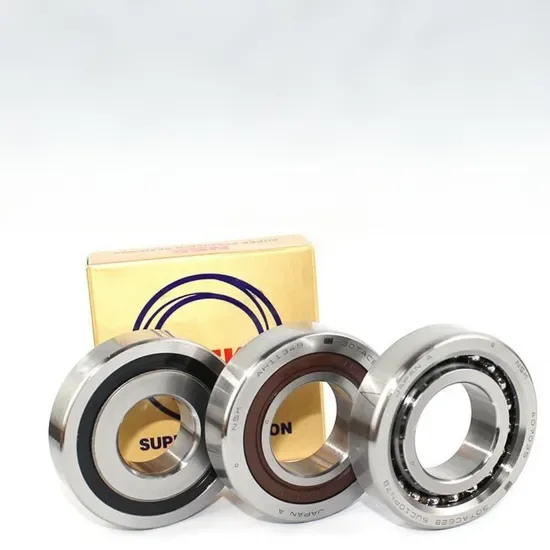
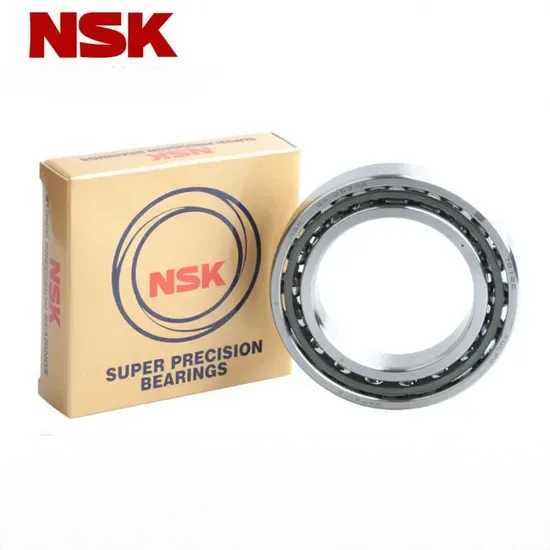
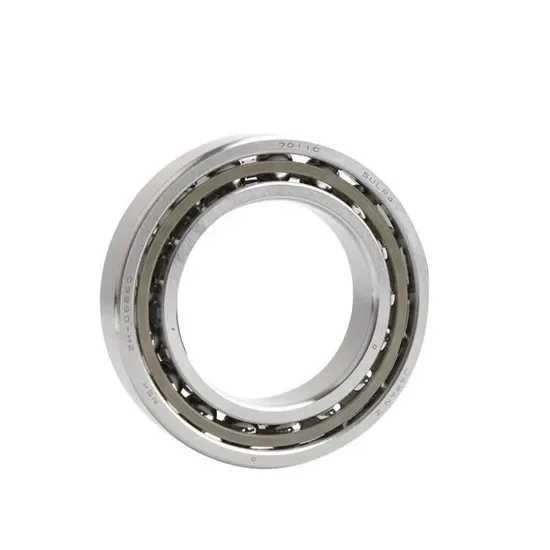
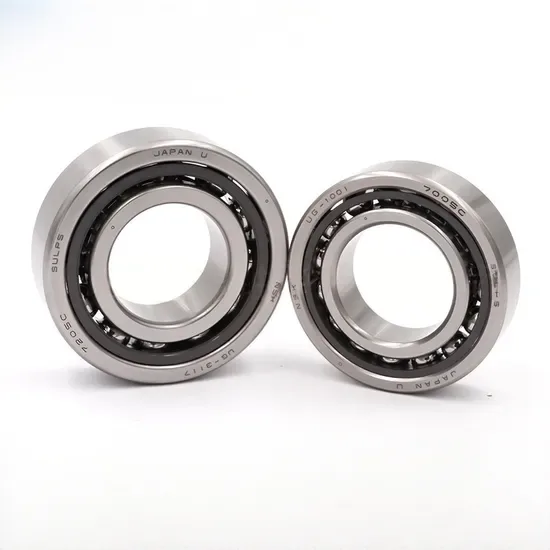
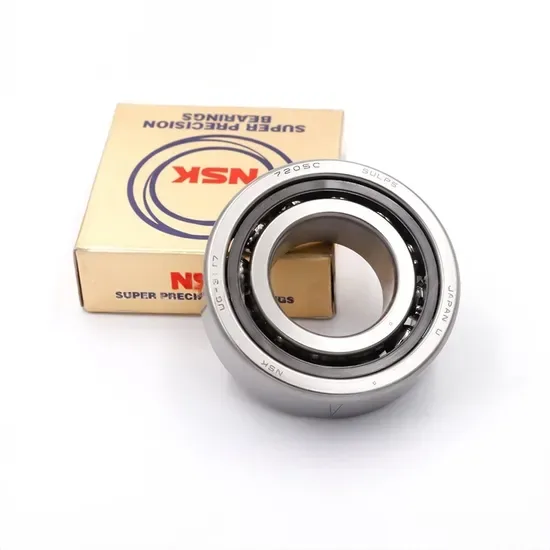
Description
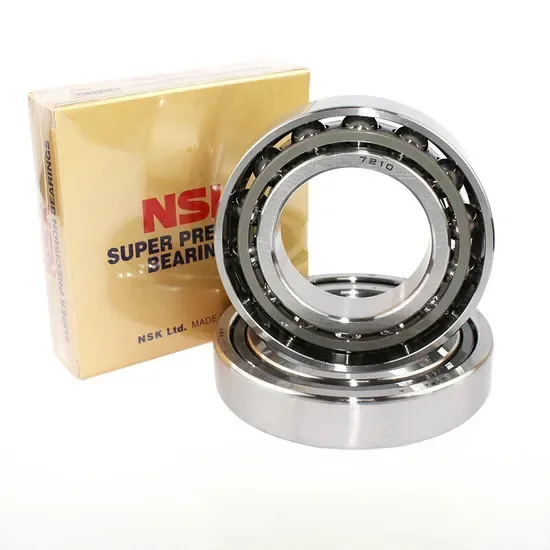
Authorized-Channel Traceability — Every NSK 7900A5SN24TRSUHP4 angular contact ball bearing we ship arrives with batch-level documentation tracing back through verified distributor networks.
Technical Specifications
| Parameter | Value |
|---|---|
| Designation | NSK 7900A5SN24TRSUHP4 |
| Bearing Type | Angular Contact Ball Bearing |
| Number of Rows | Single |
| Load Direction | Combined Radial and Axial Load |
| Material | Bearing Steel |
| Weight | 0.009 kg |
| Separated | Separable |
| Precision Class | P4 (ISO 492) |
Suffixes A5, SN24, and TRSUH contain elements that fall outside standard NSK open-catalog nomenclature; specific cage, preload, and arrangement details should be confirmed against the manufacturer’s current precision bearing catalog before finalizing procurement.
Application Suitability
| Industry | Typical Applications |
|---|---|
| Machine Tool Manufacturing | High-frequency spindle assemblies on CNC machining centers |
| Precision Equipment | Optical grinding headstocks and coordinate measuring machine rotary axes |
| Robotics | High-speed wrist joint actuators requiring minimal radial runout |
What Happens When a Spindle Bearing Fails at 24,000 RPM
A precision mismatch at P4 class does not announce itself until the spindle housing is already overheating.
I once watched a European machine shop install a standard P0 angular contact where the OEM drawing called for P4 ceramic-ball construction. The suffix difference was two characters on a line drawing, and the procurement team treated it as interchangeable. Within a week, the cage cracked under thermal load, the headstock seized mid-cut, and the rebuild cost exceeded what the entire bearing order was worth [NEED_CITE: spindle bearing failure modes under precision class mismatch]. Counterfeit units make this worse — soft inner rings with cloned QR codes pass visual inspection but collapse under sustained high-speed axial load. Cross-reference errors compound the damage when buyers match the base designation but ignore clearance, cage material, and precision suffixes that define actual field behavior.
How the NSK 7900A5SN24TRSUHP4 Matches Spindle Operating Profiles
High-speed spindles demand bearings that sustain combined radial and axial loading without thermal drift pushing internal clearance into negative territory. This NSK 7900A5SN24TRSUHP4 angular contact ball bearing is engineered for exactly that envelope — single-row angular contact geometry handles the thrust component generated by tool engagement while the bearing steel construction maintains raceway integrity at elevated rotational speeds. When we source these for machine tool rebuilders, we cross-check the application speed against the limiting speed rating and verify that the P4 tolerance class aligns with the spindle’s runout specification, rather than assuming base-number equivalence across brands.
Operating Conditions That Define Selection Accuracy
Spindle environments cycle between cold startup and sustained thermal equilibrium, meaning the bearing must accommodate differential expansion between shaft and housing without binding. Axial loads from cutting forces combine with radial loads from belt or motor drive tension, requiring a contact angle and internal geometry matched to that specific vector split [NEED_CITE: angular contact bearing load distribution under combined loading]. Lubrication choice — typically oil-air or oil-mist at these speeds — affects cage design selection and thermal dissipation capacity. Mounting precision matters equally: a P4 bearing pressed onto an out-of-round shaft loses its factory-ground raceway geometry before it ever reaches operating speed.
Reading the Suffix Chain on Precision Angular Contacts
The P4 designation on this unit references ISO tolerance class 4, delivering tighter dimensional and running accuracy than P5 or P6 grades — essential for minimizing synchronous vibration in spindle applications. Single-row angular contact construction means these bearings must be mounted in opposition pairs to handle bidirectional thrust, making preload selection critical to rigidity and thermal balance. Bearing steel races and rolling elements provide the fatigue strength needed for continuous high-speed duty, while the separable design simplifies maintenance when spindle teardowns are required for scheduled inspection. The 7900 series indicates an extra-light cross-section optimized for speed over heavy-load capacity.
What Wrong Specifications Actually Cost on the Shop Floor
Installing a bearing with incorrect internal clearance in a high-speed spindle does not produce immediate failure — it produces gradual thermal binding that operators compensate for by reducing feed rates, eroding productivity before anyone traces the root cause. A counterfeit unit with cloned markings and substandard steel may survive initial commissioning but introduces microscopic raceway spalling that contaminates the entire lubrication circuit [NEED_CITE: rolling bearing failure mode classification per ISO 15243]. Premature spindle rebuilds, scrapped workpieces from chatter marks, and unplanned downtime across a production cell represent costs that dwarf the unit price difference between verified and unverified sourcing channels.
How We Reduce Procurement Risk for Precision Bearings
Our sourcing model operates through authorized distributor channels rather than single-brand distributorship, meaning we access genuine NSK inventory with full batch traceability without the markup structure of factory-direct contracts. Every shipment includes Certificate of Conformity documentation and country-of-origin papers that satisfy import compliance requirements across the Middle East, Africa, and Latin America. Our cross-reference database aligns clearance, cage material, and precision suffixes — not just base numbers — so substituting across SKF, FAG, or NTN catalogs does not introduce silent mismatches. For high-precision orders, we arrange pre-shipment dimensional verification and provide QR code verification pathways through brand official applications so your receiving team can confirm authenticity before the bearing reaches the storeroom.
Documentation & Authenticity
- Supplier Certificate of Conformity tied to specific production batch and lot number for full traceability
- Third-party runout inspection confirming P4 running accuracy before dispatch on precision spindle orders
- Country-of-origin documentation and HS code classification for customs clearance at destination port
- QR code verification pathway via NSK official apps allowing receiving inspectors to authenticate independently
- Material certificate confirming bearing steel grade and heat treatment compliance
Storage, Handling & Mounting
- Keep the 7900A5SN24TRSUHP4 in original sealed packaging until the moment of spindle assembly — premature exposure to ambient humidity risks micro-corrosion on P4-ground raceway surfaces
- Store flat in a temperature-stable environment away from vibration sources; the 0.009 kg mass makes this bearing vulnerable to brinelling if dropped or stacked improperly
- Handle with lint-free gloves during mounting — fingerprint moisture on bearing steel initiates corrosion that compromises running accuracy at high RPM
- For paired installations, maintain factory pairing marks and mount in the marked orientation to preserve preload geometry across the spindle axis
- Verify shaft and housing seat tolerances before pressing — a P4 angular contact bearing mounted on an out-of-spec shaft loses its precision advantage before startup
Request a Technical Review for Your Spindle Application
Share your spindle speed, load spectrum, and operating temperature range so we can verify that the NSK 7900A5SN24TRSUHP4 angular contact ball bearing matches your application envelope — or identify the correct suffix variant if your OEM drawing specifies a different preload or cage configuration. Provide your OEM equipment number for cross-reference validation against our interchange database.
Frequently Asked Questions
Q: How do I verify that a NSK 7900A5SN24TRSUHP4 is genuine before installation?
A: Use the NSK official verification app to scan the QR code on the product packaging and cross-reference the batch number against the Certificate of Conformity supplied with your order. Visual checks alone are insufficient — counterfeit bearings now replicate packaging and holographic labels with convincing accuracy.
Q: Can I substitute a different brand angular contact bearing for this NSK model in my spindle?
A: Cross-brand substitution is possible but requires alignment across clearance class, cage material, contact angle, and precision grade — not just the base designation. A mismatch in any of these parameters can cause thermal binding or premature cage failure under high-speed operation.
Q: What is the difference between P4 and P5 precision for spindle applications?
A: P4 tolerance class per ISO 492 provides tighter bore, outer diameter, and running accuracy limits than P5, resulting in lower synchronous vibration and better thermal stability at high rotational speeds. Spindle applications demanding minimal runout typically require P4 or higher.
Q: What suffix details should I confirm when reordering this bearing?
A: Beyond the base 7900 designation, confirm the contact angle code, cage type, preload specification, and arrangement suffix with your OEM documentation or our technical team, as these determine whether the replacement unit will perform identically in your spindle assembly.
Q: What lubrication approach suits high-speed angular contact bearings in spindles?
A: Oil-air or oil-mist lubrication is standard for spindle speeds, providing continuous cooling and contaminant flushing. Grease lubrication is limited to lower-speed applications and requires careful fill-volume control to prevent churning losses and thermal buildup.
Confirm Your Spindle Bearing Requirements
Send us your application parameters or OEM part number, and we will return a technical match review with sourcing lead time and documentation scope within one business day.