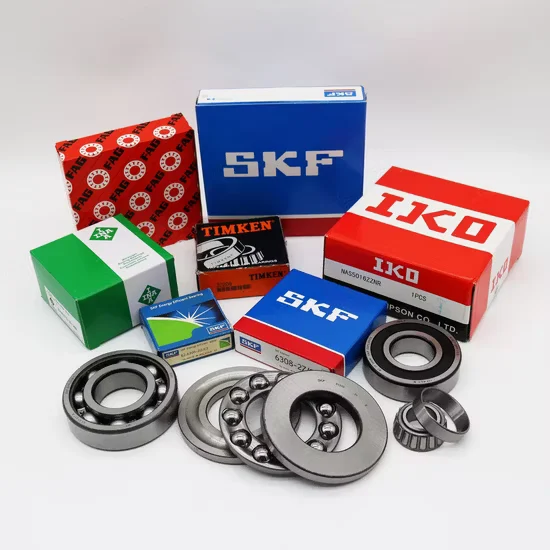
Most bearing failures are not manufacturing defects; they are installation errors.
Targeted training packages for plant maintenance teams are the most effective tool for MRO buyers to minimize unplanned downtime caused by improper bearing installation, lubrication, and handling. By shifting focus from mere product procurement to technical competency, organizations can drastically reduce premature failures and optimize long-term maintenance costs.
I still remember the smell of burnt oil and the silence of a stopped crusher in a South American mine. It was early in my career, and I had supplied a batch of spherical roller bearings to keep costs low for a client. The parts were genuine, but the installation team treated them like standard mechanical components rather than precision instruments. Within two weeks, the inner ring fractured. The resulting downtime cost far more than the savings on the bearings themselves. That incident reshaped my understanding of the supply chain. It is not enough to deliver a box with a hologram seal; the value is realized only when the component runs smoothly on the shaft. This is why providing comprehensive training packages for plant maintenance teams has become as critical as the logistics of shipping the goods.
Understanding this dynamic is essential for any procurement professional or distributor looking to support their end-users effectively. The following sections detail why specialized training is non-negotiable, what it must include, and how suppliers can facilitate this knowledge transfer.
Why do maintenance teams need specialized bearing training?
Human error in installation and lubrication accounts for the majority of premature bearing failures, not material fatigue.
Many plant managers operate under the assumption that if a bearing fails prematurely, the product quality was subpar. This is a dangerous misconception. Industry standards and failure analysis reports consistently show that a significant portion of early-life failures stem from incorrect mounting, poor lubrication practices, or inadequate storage conditions.
When a maintenance technician uses a hammer to mount a deep-groove ball bearing instead of a proper hydraulic press or induction heater, the impact forces damage the raceways and rolling elements. These micro-damages are invisible to the naked eye but create stress concentrations that lead to rapid spalling and catastrophic failure under load. Similarly, over-lubrication is as harmful as under-lubrication. Excess grease causes churning, which generates heat and degrades the lubricant’s chemical structure, leading to seal failure and contamination ingress.
Consider a steel plant in Southeast Asia that struggled with frequent conveyor breakdowns. The maintenance team was skilled in mechanical repair but lacked specific training on heavy-duty bearing handling. After implementing a focused upskilling program, they learned to control clearance adjustments during mounting and adopted precise lubrication intervals. The result was not just fewer replacements, but a noticeable extension in maintenance cycles. The bearings ran substantially longer, reducing the frequency of emergency shutdowns.
For MRO clients, this means that purchasing high-quality components without ensuring the receiving team knows how to handle them is an incomplete solution. Training packages for plant maintenance teams bridge this gap, transforming theoretical product quality into actual operational reliability.
What should be included in a comprehensive maintenance training package?
A robust training curriculum must cover the entire lifecycle of the bearing, from storage to condition monitoring, not just the final assembly.
A common mistake in generic maintenance workshops is focusing solely on the mounting process. While critical, this is only one part of the equation. A comprehensive approach ensures that every touchpoint in the bearing’s life is managed correctly.
First, storage and handling are foundational. Bearings are precision components susceptible to corrosion and contamination. Training must emphasize proper warehouse conditions, including humidity control and protection from dust. Technicians need to understand that leaving a bearing in its original packaging until the moment of installation is a basic but often ignored rule.
Second, mounting and dismounting techniques require detailed instruction. This includes selecting the right tools for the job. For smaller bearings, mechanical presses may suffice, but for larger industrial units, thermal mounting methods such as induction heating are necessary to achieve the correct interference fit without damaging the component. Disassembly training is equally important to prevent damage to the shaft and housing during replacement, which can compromise the fit for the new bearing.
Third, lubrication management is a specialized skill. Technicians must learn how to calculate the correct grease volume based on bearing size and speed, and how to select the appropriate grease type for specific operating temperatures and loads.
Finally, condition monitoring basics empower teams to detect issues before they become failures. Training on vibration analysis, temperature trending, and acoustic emission allows maintenance staff to move from reactive to predictive maintenance. This holistic approach ensures that the investment in high-quality bearings is protected by competent human oversight.
How can suppliers support MRO clients with technical training?
Reliable suppliers provide on-site guidance, failure analysis reports, and digital technical resources to complement their product offerings.
In the global bearing market, the distinction between a simple trader and a value-added partner lies in technical support. Suppliers who understand the operational challenges of their clients offer more than just logistics; they offer expertise. This is where the concept of training packages for plant maintenance teams becomes a tangible service offering.
Suppliers can support MRO clients by providing access to official brand installation manuals and technical bulletins. These documents, sourced directly from manufacturers like SKF, FAG, and NSK, contain precise specifications for mounting fits, lubrication quantities, and operating limits. However, raw data is often insufficient for field technicians. Effective suppliers curate this information into practical guides and video tutorials that are easy to digest on the shop floor.
Furthermore, on-site technical visits can be transformative. When a supplier sends an engineer to observe a complex installation or to conduct a workshop for the local maintenance crew, the immediate feedback loop accelerates learning. I have seen regional distributors increase customer retention significantly by offering joint technical training to local repair workshops. This collaborative approach builds trust and ensures that the end-user feels supported beyond the point of sale.
Failure analysis is another critical support mechanism. When a bearing does fail, a detailed report explaining the root cause—whether it was misalignment, contamination, or electrical fluting—provides a valuable learning opportunity. This turns a negative event into a constructive lesson for the maintenance team, preventing recurrence. By integrating these services, suppliers help clients build internal competency, which in turn reduces the total cost of ownership.
How to measure the ROI of maintenance training programs?
Track the reduction in unplanned downtime, emergency procurement costs, and overall bearing consumption rates to quantify the value of training.
Procurement decisions are often driven by cost, but the true cost of maintenance is not just the price of the spare part. It includes the labor for replacement, the production loss during downtime, and the premium paid for urgent shipping. Training packages for plant maintenance teams directly impact these hidden costs.
To measure return on investment, organizations should monitor key performance indicators such as mean time between failures (MTBF) and mean time to repair (MTTR). An increase in MTBF indicates that bearings are lasting longer due to better installation and care. A decrease in MTTR suggests that the team is more efficient in diagnosing and resolving issues, likely due to improved diagnostic skills gained through training.
Another metric is the ratio of emergency orders to planned purchases. Well-trained teams can predict bearing end-of-life more accurately, allowing for planned replacements during scheduled shutdowns. This eliminates the need for expensive air-freight shipments and overtime labor. In one case, a mining operation noticed a substantial drop in emergency spare-part air-freight expenses after their team completed a targeted reliability course. The savings in logistics alone covered the cost of the training program multiple times over.
Additionally, tracking the volume of bearing consumption per unit of production output can reveal inefficiencies. If consumption drops while production remains stable, it indicates that premature failures have been reduced. This qualitative improvement in reliability translates directly to the bottom line, proving that investment in human capital yields higher returns than simply seeking the lowest unit price for components.
Conclusion
Investing in competence is as vital as investing in quality components.
Training packages for plant maintenance teams are not an optional extra; they are a fundamental requirement for achieving high equipment reliability. By addressing the root causes of failure—improper installation, poor lubrication, and inadequate handling—organizations can unlock the full potential of their machinery. Suppliers play a crucial role in this ecosystem by providing not just genuine products, but the technical knowledge and support needed to use them effectively. For MRO buyers and distributors, prioritizing this holistic approach ensures sustainable operations and long-term cost efficiency.
SKF bearings mentioned here
These are the SKF bearing types covered in this article. Open a product to check its designation, category and details before you add it to your list.
 Deep Groove Ball Bearings Genuine SKF 6022 6021 6020 6019 6018 Deep Groove Ball Bearing for Cars Tractors View product 02
 Deep Groove Ball Bearings Genuine SKF 6200 6201 Deep Groove Ball Bearing for Industrial Equipment View product 03
 Tapered Roller Bearings Genuine SKF Taper Roller Bearings 32200/32005/32209/32226 for Truck Wheel View product 04
 Deep Groove Ball Bearings Genuine SKF 6205-RSH 6205-2RSH 6205-2Z/C3 Deep Groove Ball Bearing 25x52x15mm View product
Related applications
The equipment and duties this article applies to. Each one links to the SKF bearing types used there.
Quote every model in this article, line by line
Send the SKF models from this article together with your internal stock codes. Each bearing, housing and accessory is quoted on its own line, with its own quantity and specification, and nothing is substituted without your approval.
- Models plus internal codes
- Quantities per line
- Housings and accessories