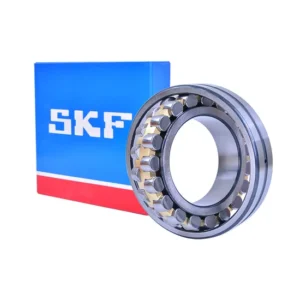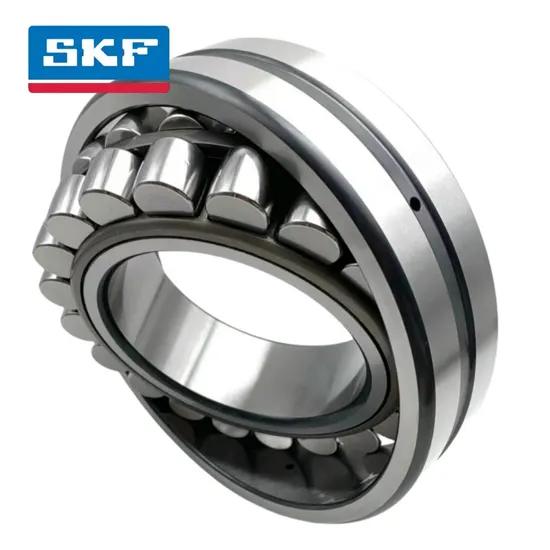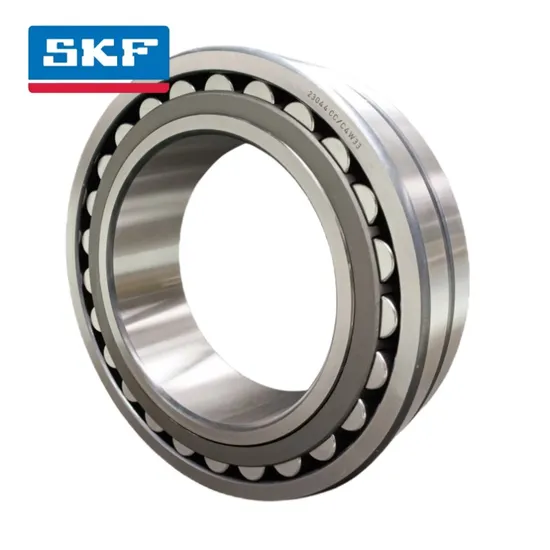
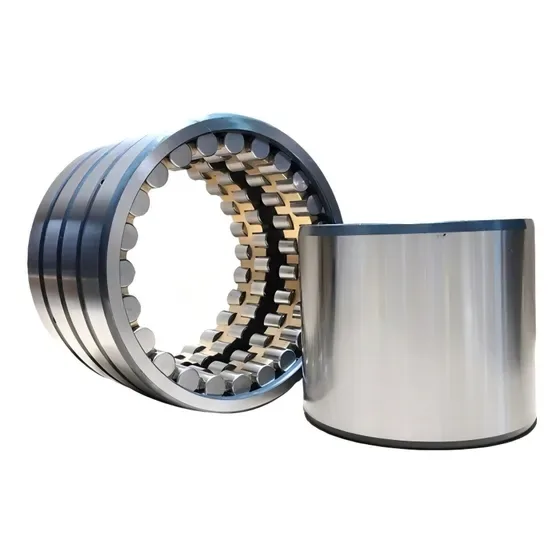
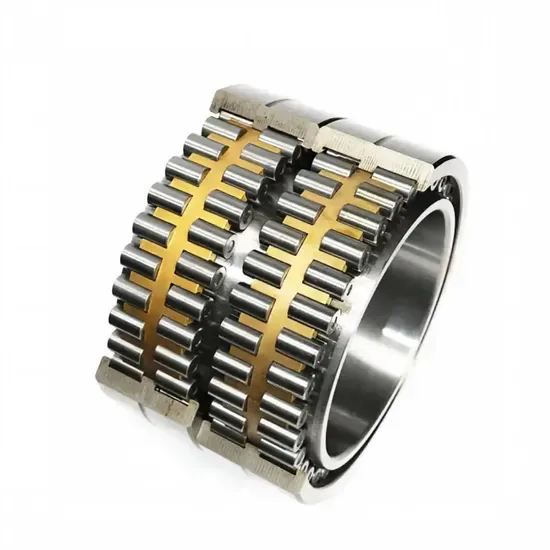
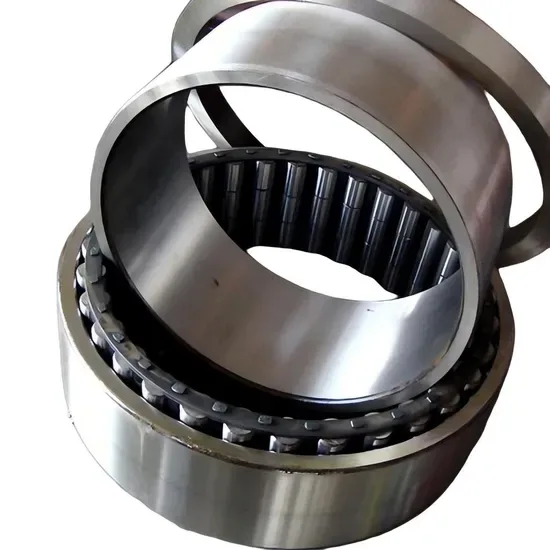
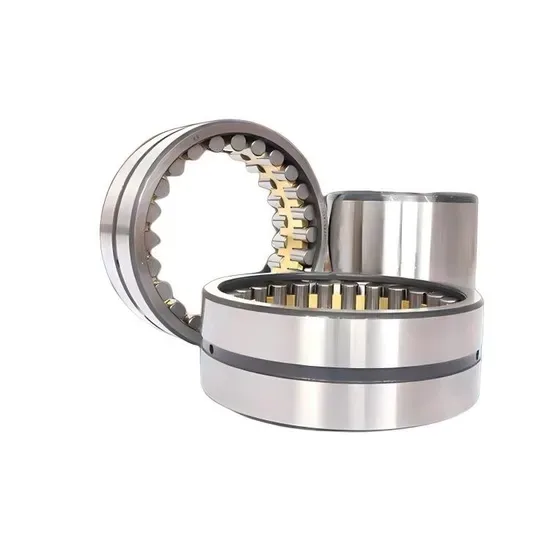
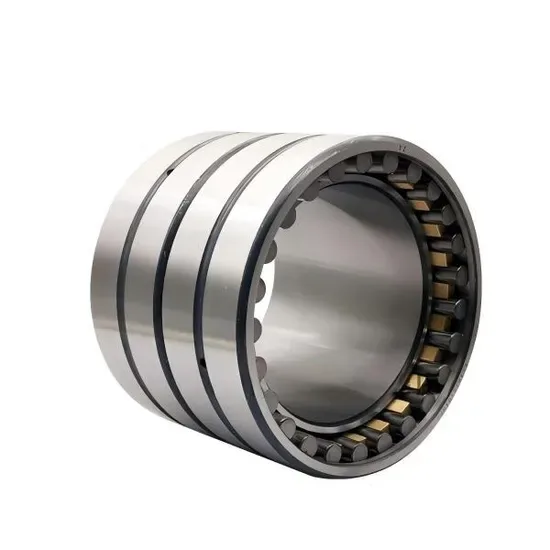
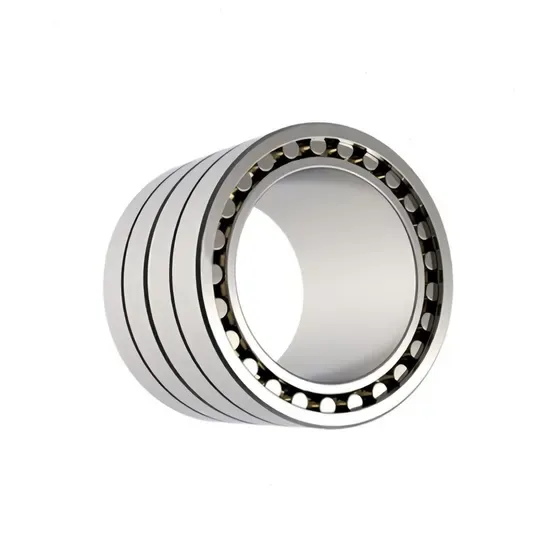
Description
Authorized Sourcing Chain — every 24022SWRCg2E4 we ship is backed by distributor invoices and country-of-origin paperwork traceable to the original factory gate.
Technical Specifications
| Parameter | Value |
|---|---|
| Designation | 24022SWRCg2E4 (generic) |
| Bearing Type | Spherical Roller Bearing |
| Bore Diameter (d) | 110 mm |
| Outside Diameter (D) | 170 mm |
| Width (B) | 60 mm |
| Material | Bearing Steel |
| Seal or Shield Type | Sealed |
| Cage Material | Unverified suffix — requires manufacturer catalog confirmation. |
| Clearance Class | Unverified suffix — requires manufacturer catalog confirmation. |
| Bore Type | Cylindrical |
| Number of Rows | Two |
| Standards | ISO 15 / ISO 281 |
Note: The SWR and Cg2E4 suffixes are not listed in mainstream SKF suffix tables; their precise meaning must be confirmed against the manufacturer’s current catalog before final procurement.
Application Suitability
| Industry | Typical Applications |
|---|---|
| Steel & Metallurgy | Continuous caster guide rollers, strand support rolls |
| Mining & Crushing | Vibrating screen shafts, jaw crusher eccentric bearings |
| Heavy Industrial Machinery | Kiln trunnion supports, large gear reducer shafts |
| Material Handling | Bucket elevator head pulleys, apron feeder drive shafts |
What Happens When Suffix Details Get Overlooked on a Continuous Caster
A single missed clearance suffix can seize an entire casting line within weeks.
I learned this the hard way on a Gulf-region steel mill project. The 24022 bearing cross-referenced correctly, but the C4 clearance requirement was missed. Standard CN units were installed, thermal cycling closed the internal clearance, and the inner ring expanded until the bearing locked solid. That unplanned shutdown cost the mill far more than the bearing itself. [NEED_CITE: thermal expansion effects on internal clearance in spherical roller bearings per ISO 281] In continuous casting, where strand temperatures and roll cooling water create relentless thermal gradients, the suffix string is not optional decoration — it dictates whether the bearing survives the first heat cycle or destroys downstream equipment.
Matching the 24022SWRCg2E4 to Continuous Casting Conditions
Continuous caster rolls operate under heavy radial loads with moderate speeds and constant thermal shock from alternating spray water and molten steel proximity. The 24022 spherical roller bearing addresses these demands through its self-aligning geometry, which compensates for roll deflection and housing misalignment that would otherwise concentrate stress on a narrow band of rollers. The sealed design adds a contamination barrier against scale fines and cooling water ingress — two of the most common failure accelerators in caster segments. When we source this designation, we verify that the clearance class, cage material, and seal configuration all align with the caster’s specific thermal profile, rather than assuming the base number alone is sufficient.
Thermal Gradients, Load Spectra, and Seal Integrity
Caster guide rolls see combined loading: steady radial forces from strand weight and ferrostatic pressure, with axial components from roll misalignment and thermal bowing. Speeds are typically low — often below 200 rpm — but the thermal environment is punishing. Roll surface temperatures can exceed 150 °C while internal bearing temperatures depend heavily on clearance selection and lubricant condition. Sealed bearings in this zone must balance contamination exclusion against the friction heat generated by seal contact lips; in some caster designs, external seals on the housing shoulder the primary defense, leaving an open bearing preferable for lower operating temperature. [NEED_CITE: sealed versus open bearing selection in contaminated steel mill environments] Installation practice also matters: induction heating to 110–120 °C is standard for cylindrical bore mounting, but overheating destroys cage integrity and alters residual clearance permanently.
Decoding the Core Specifications That Drive Performance
The 110 mm bore, 170 mm outside diameter, and 60 mm width place this bearing in a mid-range spherical roller class widely used across caster segments and vibrating equipment. The two-row roller arrangement distributes radial loads across a broader contact arc, improving load capacity relative to single-row alternatives. The spherical outer raceway allows angular misalignment — critical on long caster rolls where housing parallelism degrades under thermal distortion. Cage material selection directly influences high-temperature durability: machined brass cages tolerate sustained heat better than stamped steel or polyamide alternatives, though the specific cage code in this identifier requires catalog verification before committing to an order. Clearance class determines whether internal play remains positive after the inner ring expands under operating temperature; on a caster roll, selecting CN where C3 or C4 is needed leads to preload conditions that accelerate fatigue spalling within months rather than years.
The Hidden Cost of Selection Errors
Correct specification paired with genuine supply prevents cascading failures. A counterfeit bearing with a soft inner ring — identifiable only through hardness testing — will develop brinelling under static loads and initiate spalling under rotation, eventually sending debris through the entire roll gearbox. [NEED_CITE: bearing failure mode classification per ISO 15243] Wrong clearance triggers thermal seizure, destroying not just the bearing but the roll journal and potentially the housing bore. Mismatched cage material fails catastrophically at temperature, releasing rollers into the raceway and locking the strand. Each scenario converts a planned maintenance item into an emergency shutdown with collateral equipment damage and warranty voidance across the drive train.
How Procurement Engineers Verify Supply Through Us
Every 24022SWRCg2E4 we source travels through authorized distributor channels, not gray-market traders. Batch traceability links each unit to its production lot with supporting invoices. Our cross-reference database aligns clearance, cage, and precision across SKF, NSK, FAG, TIMKEN, NTN, and KOYO — so substitution decisions are made on matched engineering parameters, not just base numbers. We provide country-of-origin documentation for import compliance and third-party inspection coordination when project specifications demand it. Authenticity verification guidance includes QR code pathways through official brand applications, reducing exposure to cloned packaging and soft-ring counterfeits circulating through unverified middlemen.
Documentation & Authenticity
- Supplier Certificate of Conformity tied to shipment batch numbers for full lot traceability on every 24022SWRCg2E4 unit
- Material certificates confirming bearing steel grade (GCr15 / 100Cr6 equivalent) with chemical composition breakdown
- Country-of-origin statements formatted for customs clearance in Middle East, African, and Latin American import jurisdictions
- Third-party dimensional inspection reports verifying bore, OD, and width tolerances before container loading
- QR code verification instructions linking to brand official authentication applications for on-site counterfeit screening
- HS code and trade classification support to streamline import documentation for distributor and MRO buyers
Storage, Handling & Mounting
- Keep 24022SWRCg2E4 units in original sealed packaging until the day of installation; early exposure to humid steel mill atmospheres promotes raceway corrosion on the 110 mm bore surface
- Store flat on shelving — never standing on edge — to prevent cage distortion under the bearing’s own weight in the sealed two-row configuration
- Use induction heating between 110 °C and 120 °C for cylindrical bore mounting; flame heating risks localized hot spots that compromise the sealed lip integrity and cage material
- Confirm shaft and housing tolerances against ISO 286 recommendations before press or heat-mount to avoid eliminating designed internal clearance
- Handle with clean cotton or nitrile gloves; fingerprint acids initiate corrosion pits on the 170 mm outer raceway that become fatigue initiation sites under cyclic loading
- For sealed variants, do not attempt re-greasing through the seal lips; verify factory fill is appropriate for the operating temperature range of the target caster segment
Ready to Confirm Fit and Availability?
Share your continuous caster segment number, operating temperature range, and required clearance class so we can verify whether the SWR and Cg2E4 suffixes match your application parameters. If you have an OEM equipment drawing number, send it over for a full cross-reference check across all six major brands with cage, clearance, and precision alignment. We will confirm current stock availability, lead time, and the documentation package your import process requires before you commit to a purchase order.
Frequently Asked Questions
Q: How do I verify the authenticity of a 24022 spherical roller bearing to avoid counterfeits in steel mill service?
A: Genuine bearings carry traceable batch codes linked to manufacturer production records. We supply Certificate of Conformity documentation and guide you through QR code verification using brand official applications. For steel mill applications where counterfeit inner rings with sub-standard hardness cause rapid brinelling, requesting material certificates with chemical composition data provides an additional verification layer that gray-market suppliers typically cannot produce.
Q: What should I check when cross-referencing a 24022 bearing across different brands?
A: Beyond the base designation, confirm that clearance class, cage material, and precision grade all match across the substitute brand. A 24022 from one manufacturer may default to CN clearance while another defaults to C3; installing the wrong clearance on a continuous caster roll causes thermal seizure under operating temperature. Our interchange database compares these parameters simultaneously across SKF, NSK, FAG, TIMKEN, NTN, and KOYO so substitutions are engineered, not assumed.
Q: Why does clearance class matter specifically for continuous caster applications?
A: Continuous caster rolls operate with significant thermal gradients between the hot roll surface and cooled bearing interior. Standard CN clearance may close to zero or negative preload under this differential expansion, generating excessive friction and premature fatigue. C3 or C4 clearance maintains positive internal play at operating temperature, preserving the lubricant film and extending L10 life. The correct clearance depends on measured roll surface temperature and housing cooling conditions.
Q: Should I choose a sealed or open 24022 bearing for a contaminated caster environment?
A: Sealed bearings protect against scale fines and water spray without requiring external seal maintenance, but seal contact friction adds operating temperature. In some caster designs, the housing incorporates labyrinth or V-ring seals that handle primary contamination exclusion, making an open bearing preferable for lower friction and the option to re-lubricate with application-specific grease. Share your housing seal configuration and we can advise on the optimal configuration.
Q: What lead times apply to 24022 spherical roller bearings with specific suffix combinations?
A: Availability depends on the exact suffix configuration and current distributor stock levels. Common open variants with standard clearance are typically held in regional distribution, while sealed units with specialized cage or clearance suffixes may require factory production scheduling. Send your full designation and required quantity for a confirmed availability date and shipment timeline.
Confirm Your 24022 Specification and Stock Position
Send us your application parameters or OEM equipment number to verify suffix compatibility and receive a documentation-backed quotation.
[NEED_CITE: authorized distributor channel verification for industrial bearing procurement]