
SKF Bearings for Detroit EV Battery Assembly Lines | ISO 9001 Supplier
Cross-reference charts will not save your conveyor line — thermal load calculations will.
Selecting SKF interchange bearings for EV battery assembly conveyors in Detroit requires matching internal clearance and lubricant drop point to the actual curing oven temperature profile, not merely copying a part number from a competitor’s catalog.
I still remember the batch I signed off on years ago — deep groove bearings shipped to a battery cell assembly plant near Detroit. The rollers came back seized within weeks. The curing ovens ran hotter than the spec sheet assumed, and the C3 clearance I approved at the inspection bench was simply not enough for that thermal gradient. The line sat idle while maintenance crews pulled hundreds of bearing positions for inspection. That failure sits behind every technical conversation I have today when a buyer asks me for SKF interchange bearings for an EV assembly line. I no longer reach for a cross-reference chart first. I ask what runs next to the bearing, how hot the housing gets, and how fast the shaft turns. [NEED_CITE: root cause distribution of conveyor bearing failures in high-temperature industrial environments per ISO 15243 damage categories]
The rest of this article walks through why standard substitution logic breaks down in EV battery plants, what thermal reality Detroit assembly lines actually impose, how to choose clearance and lubricant correctly, and which supplier documentation you must request before purchase.
Why Standard SKF Cross-Reference Charts Fail in EV Battery Plants?
A cross-reference chart resolves dimensional compatibility — it does not resolve thermal compatibility.
Most MRO purchasers and even some equipment engineers begin their SKF interchange bearings search by opening a dimension table: bore, outside diameter, width, and basic dynamic load rating. For a standard conveyor roller in an ambient warehouse, this approach works perfectly. Inside an EV battery curing oven zone, it fails systematically. [NEED_CITE: bearing selection criteria for elevated temperature applications per ISO 15243 and SKF general bearing selection guidelines]
The reason is straightforward. Cross-reference charts assume the operating environment described in the original equipment specification. They do not account for the fact that battery module curing ovens in Detroit-area EV plants routinely push housing temperatures beyond the assumptions embedded in a standard deep groove bearing catalog rating. When a bearing designed for continuous operation at a certain temperature range is placed in a zone where the housing routinely exceeds that range by a meaningful margin, the internal clearance that was correct at room temperature collapses under differential thermal expansion between the inner ring, outer ring, and rolling elements.
I have reviewed substitution requests where the buyer matched the SKF interchange bearings part number exactly — same series, same bore, same C3 clearance — yet the replacement bearings failed within weeks. The dimensional match was flawless. The thermal match was nonexistent.
The failure pattern is consistent: initial noise increase, followed by torque spikes, followed by complete seizure. Maintenance teams often blame lubrication. In reality, the lubrication was never the root cause — the clearance was. [NEED_CITE: relationship between operating temperature, internal clearance reduction, and bearing preload in deep groove ball bearings]
What Thermal Load Do Detroit EV Assembly Conveyors Actually Impose?
Curing oven zones create temperature distributions that are neither uniform nor static — bearing positions near zone boundaries experience the worst of both worlds.
Detroit-area EV battery assembly lines typically include electrode coating, cell stacking, module assembly, and curing or aging stages. The curing stage is where thermal load becomes the dominant design constraint for conveyor bearings. [NEED_CITE: typical temperature profiles in lithium-ion battery module curing and aging processes]
In practice, the oven is divided into multiple heating zones, each set to a different target temperature. The conveyor chain or belt carries battery modules through these zones sequentially. Bearings located at the transition between two zones — where one side of the conveyor housing is exposed to a higher temperature band and the other side to a lower band — experience asymmetric thermal expansion. The inner ring, mounted on a steel shaft that conducts heat from the oven interior, expands at a different rate than the outer ring, which is seated in a housing partially exposed to ambient return air.
This asymmetry is what destroys standard clearance assumptions. A bearing selected with C3 clearance at room temperature may find its effective internal clearance reduced to near zero — or even negative — once the thermal gradient stabilizes across the housing. The result is artificial preload, excessive contact stress, accelerated lubricant degradation, and eventual seizure.
I have walked lines where maintenance engineers measured housing temperatures at bearing positions and found variation of a substantial margin across a single roller shaft. The bearing at the hot end was running significantly hotter than the catalog assumption. No cross-reference chart captures this reality. [NEED_CITE: thermal gradient effects on bearing internal clearance and preload in conveyor applications]
The implication for anyone sourcing SKF interchange bearings for these positions is clear: you must obtain the actual temperature profile at each bearing position along the conveyor, not just the oven setpoint. The oven setpoint is a process target. The bearing housing temperature is a physical reality. They are rarely the same number.
How to Select the Right Clearance and Lubricant for High-Temp Conveyor Bearings?
C3 clearance is a starting point — not a final answer. The correct clearance depends on calculated thermal expansion, not catalog habit.
The standard approach in many MRO environments is to default to C3 clearance whenever a bearing runs warm. This habit originates from valid engineering logic: C3 provides additional internal clearance beyond the standard CN group, accommodating moderate thermal expansion of the inner ring relative to the outer ring. [NEED_CITE: ISO 5753 radial internal clearance groups for deep groove ball bearings and their temperature compensation intent]
However, in EV battery curing oven conveyors, C3 is frequently insufficient. The reason is that the thermal expansion differential between the inner ring and outer ring can exceed the additional clearance that C3 provides — particularly when the shaft is solid steel, conducting heat directly from the oven interior, and the housing is partially cooled by return airflow.
The correct approach requires calculating the expected thermal expansion differential using the shaft and housing materials, the measured or estimated operating temperatures at each ring, and the bearing geometry. If the calculated expansion exceeds the C3 clearance reserve, the next group — C4 — must be considered. C4 provides a larger clearance reserve, but it also introduces trade-offs: increased sensitivity to external loads, potential for cage instability at lower speeds, and higher noise if the bearing is later operated at lower temperatures than designed. [NEED_CITE: bearing clearance selection methodology considering thermal expansion differential between inner and outer ring]
Lubricant selection is equally critical and equally misunderstood. The grease drop point must exceed the maximum bearing operating temperature by a meaningful margin — not just match it. A grease with a drop point barely above the operating temperature will experience oil bleed, base oil separation, and eventual channeling, leaving the rolling elements effectively dry.
I have examined failed bearings from Detroit EV lines where the grease had turned hard and dark — a clear sign of thermal degradation beyond the grease’s designed operating envelope. The bearing was dimensionally correct. The clearance was technically within catalog range. The grease was the weak link.
For SKF interchange bearings in these applications, the lubricant must be evaluated against three parameters: drop point, base oil viscosity at operating temperature, and relubrication interval compatibility with the conveyor maintenance schedule. If the conveyor runs through a curing zone where relubrication during production is impossible, the grease must sustain the full thermal cycle between scheduled maintenance windows.
What Documentation Should You Request from Bearing Suppliers?
ISO 9001 certification, material traceability reports, and lubricant thermal test data are the minimum threshold — not the premium tier.
When sourcing SKF interchange bearings for critical EV assembly line positions, the documentation package is as important as the bearing itself. I have seen procurement teams accept bearings based on a cross-reference match and a commercial invoice, only to discover during failure analysis that the grease batch had a lower drop point than specified, or the bearing steel lacked the traceability needed to verify material grade.
The baseline documentation you should request includes:
ISO 9001 certification — This confirms the supplier operates under a certified quality management system. It does not guarantee every bearing is perfect, but it confirms that processes are controlled and auditable. For SKF interchange bearings intended for high-temperature conveyor service, this is non-negotiable. [NEED_CITE: ISO 9001 requirements for bearing manufacturing quality management systems]
Material certificates and traceability reports — These documents confirm the bearing steel grade, heat treatment batch, and hardness verification. Without them, you cannot verify that the rings and rolling elements meet the required material specification. In failure analysis scenarios, the absence of material traceability makes root cause determination significantly more difficult.
Lubricant thermal test reports — If the bearing is supplied pre-lubricated, you need confirmation that the grease drop point, base oil viscosity, and operating temperature range match your application requirements. A generic grease specification sheet is insufficient — you need batch-level or at least product-line-level thermal performance data.
Dimensional inspection reports — For critical positions, request verification that bore, outside diameter, and width conform to the applicable ISO tolerance class. This is particularly important when substituting bearings from alternative suppliers against SKF originals.
I have worked with buyers who received bearings with full documentation packages and experienced zero substitution-related failures over extended service periods. I have also worked with buyers who received identical-looking bearings with no documentation — and faced repeated seizures within months. The bearing looked the same. The paper trail told a very different story.
Conclusion
Thermal load, not part number matching, determines whether your SKF interchange bearings survive an EV battery curing oven conveyor.
Standard cross-reference charts solve dimensional compatibility but ignore the thermal gradients that actually govern bearing life in Detroit EV assembly lines. Correct clearance selection requires calculating expansion differentials from real housing temperature measurements, and lubricant selection requires verifying drop point margins against peak operating conditions. Requesting ISO 9001 certification, material traceability, and lubricant thermal test data transforms your procurement from a guessing exercise into an engineering-controlled process.
SKF bearings mentioned here
These are the SKF bearing types covered in this article. Open a product to check its designation, category and details before you add it to your list.
 Deep Groove Ball Bearings SKF 16001 16002 16003 16004 16005 Deep Groove Ball Bearing for Winder Worldwide Use View product 02
 Deep Groove Ball Bearings Genuine SKF 6022 6021 6020 6019 6018 Deep Groove Ball Bearing for Cars Tractors View product 03
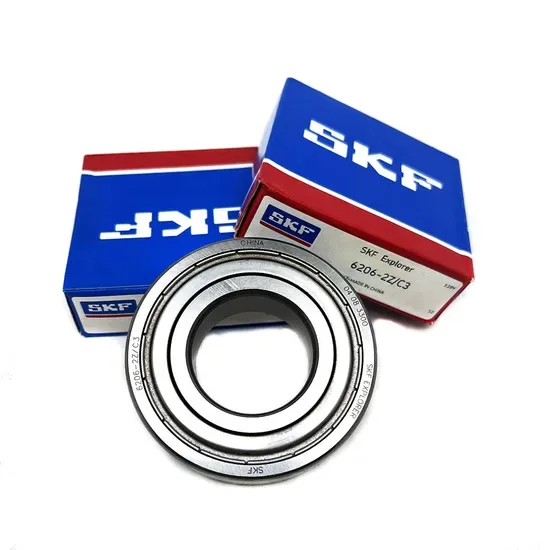 Deep Groove Ball Bearings SKF Deep Groove Ball Bearing 6812 6003 6204 6304 6305 High-Speed Wear-Resistant View product 04
 Deep Groove Ball Bearings SKF 16010 16009 16016 16020 61900Z Deep Groove Ball Bearing for Auto Parts View product
Related applications
The equipment and duties this article applies to. Each one links to the SKF bearing types used there.
Quote every model in this article, line by line
Send the SKF models from this article together with your internal stock codes. Each bearing, housing and accessory is quoted on its own line, with its own quantity and specification, and nothing is substituted without your approval.
- Models plus internal codes
- Quantities per line
- Housings and accessories